

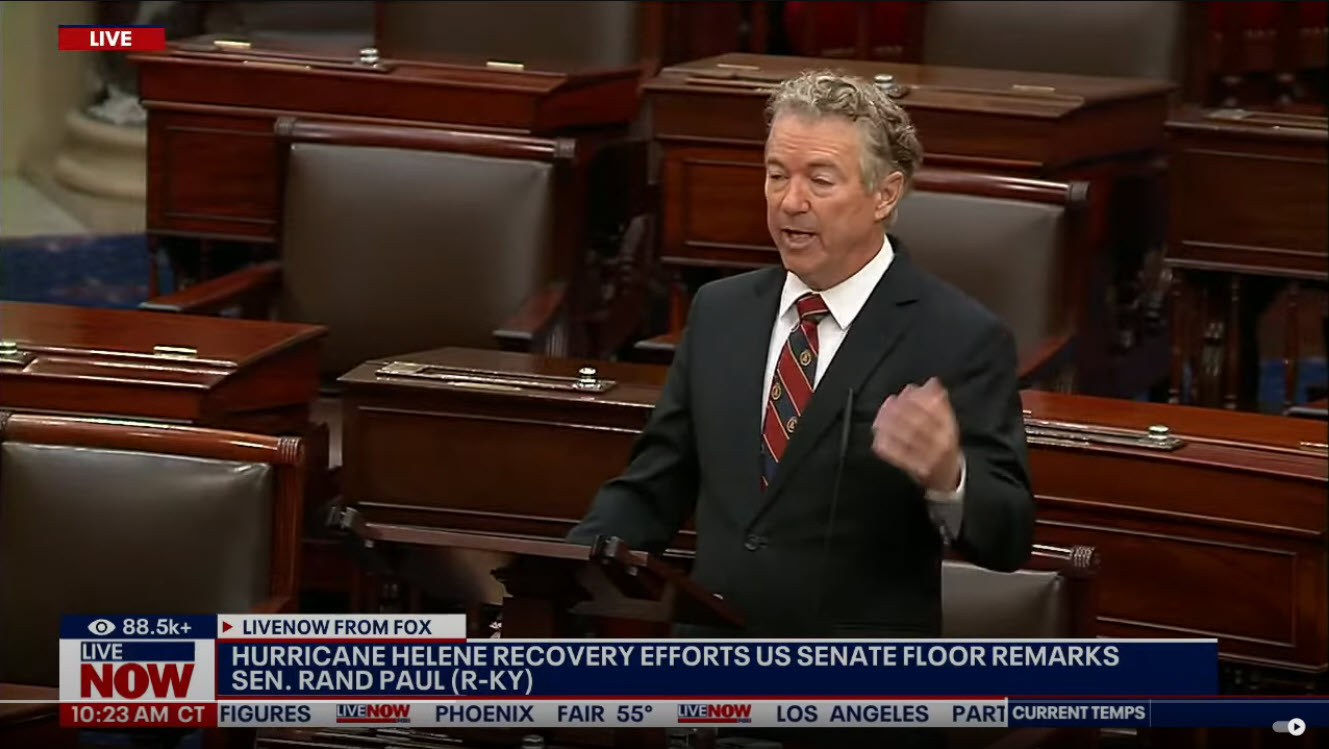
Following the U.S. Department of Defense’s announcement of an additional $425 million aid package for Ukraine, Senator Rand Paul (R-KY) has sharply criticized the Biden administration for allocating taxpayer money to overseas conflicts while what he calls “urgent domestic needs” remain unaddressed. The latest tranche, announced Wednesday, marks the 67th instance since August 2021 that the Biden administration has drawn on the Presidential Drawdown Authority (PDA) to support Ukraine as it continues to defend itself against Russian aggression.
Senator Paul, known for his long-standing stance against foreign military entanglements and unchecked federal spending, condemned the decision, highlighting that America, in his words, is “broke.” In a fiery speech, Paul questioned the necessity of further investment in Ukraine, arguing that American infrastructure, healthcare, and economic stability should take precedence over foreign aid. “We are spending billions we don’t have, on conflicts far from our shores, while our roads crumble, and our veterans go without care,” Paul stated, expressing a growing sentiment among some Americans weary of prolonged international engagements.
Breakdown of the $425 Million Aid Package
The new aid package includes a wide array of military supplies and weaponry, reflecting the Biden administration’s commitment to reinforcing Ukraine’s defense capabilities. According to the DoD press release, the $425 million PDA package includes:
- NASAMS Ammunition: Additional munitions for the National Advanced Surface-to-Air Missile Systems, critical for Ukraine’s air defense.
- RIM-7 and Stinger Missiles: To bolster air defense capabilities against Russian drones and aircraft.
- HIMARS Ammunition: Continued support with rockets for High Mobility Artillery Rocket Systems, essential for countering Russian ground forces.
- Artillery Rounds and Anti-Tank Weapons: 150mm and 105mm artillery ammunition, TOW missiles, Javelin, and AT-4 anti-armor systems for versatile battlefield use.
- HMMWVs and Small Arms: High Mobility Multipurpose Wheeled Vehicles, small arms, and various other munitions and training equipment to sustain Ukrainian ground forces.
The package also covers spare parts, ancillary equipment, demolitions, and training to ensure that Ukraine’s forces are prepared and equipped to sustain ongoing defensive operations.
Debate Over U.S. Priorities Amid Rising Domestic Concerns
The $425 million package, as part of the larger U.S. support effort for Ukraine, has fueled an intense debate on Capitol Hill. Critics like Paul argue that the continuous supply of funds and resources to Ukraine is draining the U.S. Treasury at a time when domestic issues demand urgent attention. “We have a crumbling healthcare system, and Americans are struggling with inflation, yet we continue to send billions overseas,” Paul declared, calling for the Biden administration to “rethink its priorities.”
Paul’s remarks have sparked a new wave of scrutiny over the Biden administration’s foreign policy approach, with several members of Congress now voicing concerns about unchecked spending and the long-term sustainability of aid to Ukraine. Some lawmakers have advocated for a more balanced approach, emphasizing that while they support Ukraine’s fight for sovereignty, there must be a “limit” on U.S. involvement.
In contrast, the Biden administration and many defense analysts argue that supporting Ukraine is both a moral and strategic imperative, noting that U.S. assistance serves to counter Russian aggression and prevent further destabilization in Eastern Europe. Proponents of continued aid assert that allowing Russia to succeed could embolden authoritarian regimes and pose long-term risks to global security.
Bipartisan Tensions Over Foreign Aid and Fiscal Responsibility
The debate underscores a broader tension within Congress, with foreign aid becoming a divisive issue among both Republicans and Democrats. Many defense and foreign policy experts argue that U.S. aid to Ukraine is part of a critical strategy to contain Russia without direct military engagement. However, the question of whether the United States can sustain such extensive support remains contentious as inflation and rising federal debt continue to impact American households.
Supporters of continued aid, including members of the Biden administration, argue that financial and military support for Ukraine prevents the conflict from escalating into a wider regional war, which could have greater economic and security repercussions. Defense Secretary Lloyd Austin stated, “Helping Ukraine now is an investment in peace and security for the future. If Russia is unchecked, it sets a dangerous precedent for aggression.”
As the war in Ukraine grinds on, both sides of the U.S. political aisle will likely continue to face pressure from constituents who either support aiding Ukraine or question the economic viability of such extensive foreign commitments.
Future Implications of U.S. Support for Ukraine
With the latest PDA package now approved, analysts suggest that the U.S. will likely continue similar assistance to Ukraine as long as the conflict persists. However, growing calls for oversight and clearer limits on foreign aid spending suggest that Congress may soon impose stricter controls or require greater justification for future allocations.
Senator Paul’s vocal opposition underscores a sentiment of “aid fatigue” that is growing among some Americans. Whether this will lead to significant changes in U.S. foreign policy remains to be seen, but it is clear that the issue has prompted a serious debate about America’s global responsibilities versus its domestic challenges. As the Biden administration navigates this complex landscape, the future of U.S. aid to Ukraine—and the domestic reactions it sparks—will remain a focal point in Washington.

