

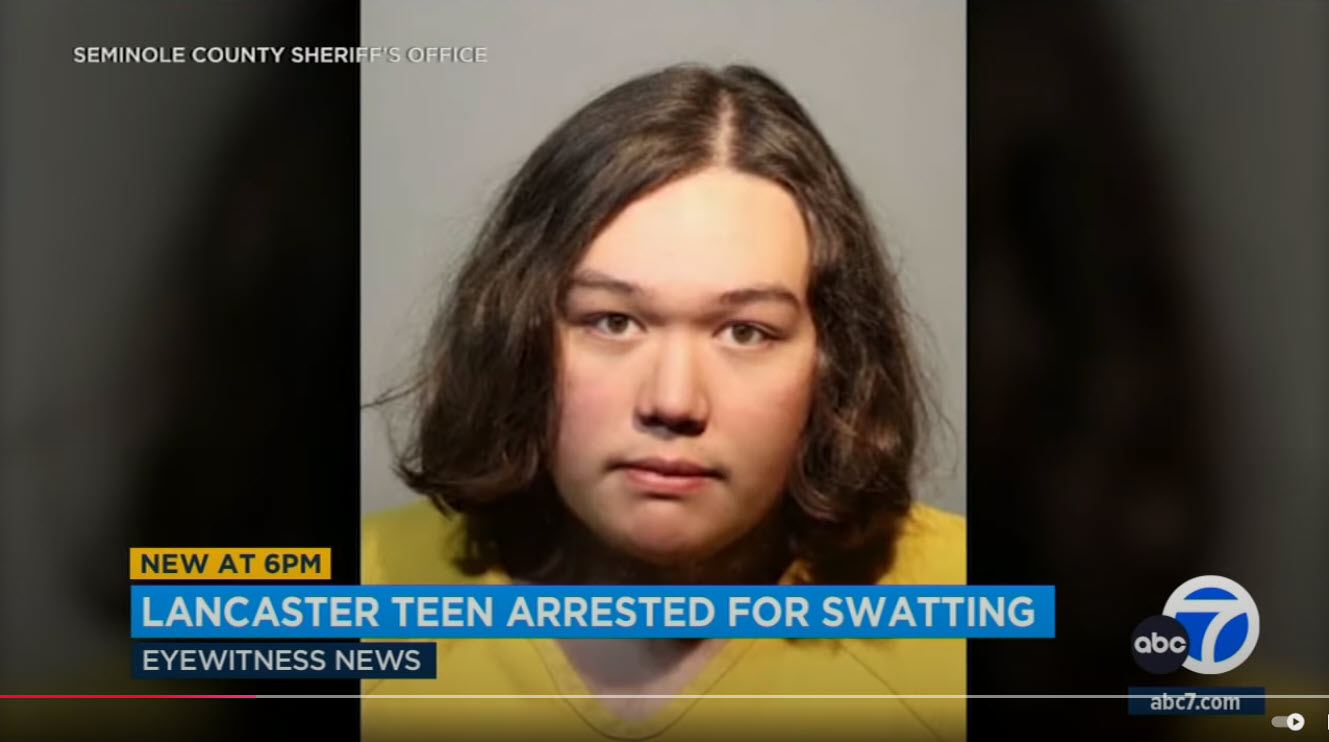
An 18-year-old California resident, Alan Filion, has pleaded guilty to making hundreds of false threats, including fake bomb threats and mass shooting alerts, targeting schools, religious institutions, and government officials across the United States. In a case that highlights the growing dangers of “swatting”—the act of making fraudulent emergency calls to prompt large-scale police responses—the U.S. Department of Justice announced the plea in a federal court in Florida on Wednesday, November 13. Filion faces up to 20 years in prison, as each of the four charges he pleaded guilty to carries a maximum sentence of five years.
According to court documents, Filion’s swatting spree involved threats made through phone calls and online messaging, causing widespread panic and significant disruption to public services. The calls spanned several states, forcing numerous schools into lockdown, diverting critical emergency resources, and causing distress among parents, students, and community members. Federal officials assert that Filion’s actions were not isolated incidents but part of a sustained pattern of coordinated threats aimed at creating chaos and anxiety on a national scale.
Details of the Swatting Incidents
The FBI’s investigation revealed that Filion made false emergency calls to a variety of institutions, claiming active shooter situations, bomb threats, and other imminent dangers. In one case, Filion reportedly targeted a high school in California, claiming a shooter was on the premises, which led to a full-scale lockdown and mobilization of law enforcement, only to be later discovered as a hoax. Filion’s swatting activities extended to religious institutions and even involved threats against public officials, according to the Department of Justice.
Filion’s series of hoaxes reportedly involved intricate planning, as he used internet-based technology to mask his identity, evading authorities for an extended period. However, a coordinated investigation between the FBI and local law enforcement agencies eventually traced the calls back to Filion, leading to his arrest and subsequent plea. Prosecutors emphasized the significant financial and emotional toll his actions had on communities, pointing out that each false call required a rapid response from emergency services, including police, paramedics, and bomb squads.
The Dangers and Costs of Swatting
The phenomenon of swatting has grown more frequent in recent years, as individuals—often young people—use the tactic to instill fear or seek notoriety. Swatting incidents, which were once rare, have increased with the rise of online gaming and social media, where anonymity emboldens individuals to make these harmful hoaxes. Swatting poses serious risks to public safety, as the response to these false alarms can sometimes result in violent confrontations, property damage, and, in rare cases, even loss of life.
Law enforcement officials warn that swatting places an undue burden on emergency services, diverting them from genuine emergencies and increasing the likelihood of mistakes in high-stress situations. Assistant U.S. Attorney Jane Harmon, who led the prosecution, noted, “Swatting is not a prank; it is a calculated, dangerous crime that creates fear and disrupts lives. Today’s guilty plea sends a clear message that those who engage in these acts will face serious consequences.”
Sentencing and Next Steps
Filion, who pleaded guilty to four counts of making interstate threats, will remain in federal custody until his sentencing, scheduled for early next year. Each charge carries a maximum sentence of five years, potentially totaling 20 years in prison if the judge imposes the maximum penalty. Legal experts suggest that while his age may be taken into account, the sheer volume and severity of his actions will likely influence the court’s decision toward a significant sentence.
Mental health evaluations and psychological assessments are expected to be part of Filion’s pre-sentencing review, given the compulsive nature of his actions and the pattern of repeated threats. Some defense attorneys have raised the issue of underlying mental health concerns in similar cases, noting that individuals who engage in swatting often struggle with impulsive or antisocial behavior patterns. However, prosecutors maintain that Filion’s age and potential mental health status do not excuse the fear and chaos he caused.
Reactions from Affected Communities
The guilty plea has brought relief to some of the communities affected by Filion’s swatting campaign. School districts and religious institutions, which were repeatedly disrupted by lockdowns, evacuation protocols, and police presence, have expressed a sense of closure as the case comes to an end. Parents and teachers, many of whom had to comfort frightened children during these incidents, welcomed the resolution, with several voicing hope that Filion’s case will deter others from engaging in similar activities.
Additionally, Filion’s case has prompted a renewed focus on legislative measures to curb swatting. Lawmakers are calling for stricter penalties and greater technological oversight to combat hoaxes involving emergency services. Recent legislation in several states has introduced harsher penalties for swatting, recognizing the toll it takes on public resources and community well-being.
A Broader Call to Address Swatting
Filion’s case has underscored the need for continued public awareness and education on the dangers of swatting. Law enforcement agencies are encouraging schools and communities to implement protocols for quickly identifying and responding to these hoaxes while minimizing disruption. Community leaders and psychologists advocate for addressing the social and psychological factors that may lead individuals to engage in swatting, including peer influence in online spaces where such activities are sometimes glorified.
As Filion awaits sentencing, officials remain hopeful that his case will serve as a turning point in the fight against swatting, deterring future incidents and helping create safer, more resilient communities across the country.

