

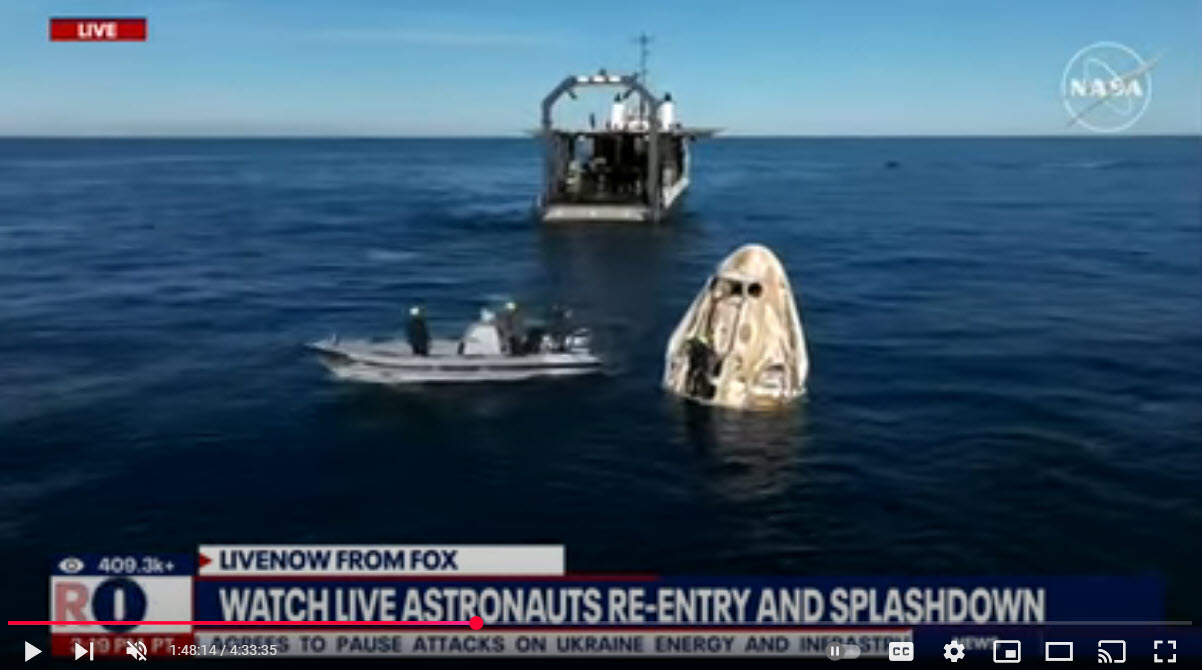
NASA astronauts Barry “Butch” Wilmore and Sunita “Suni” Williams have safely returned to Earth after an unplanned nine-month mission aboard the International Space Station (ISS). The astronauts, who initially embarked on a brief test flight, faced extended time in orbit due to technical issues with their spacecraft.
Wilmore and Williams launched on June 5, 2024, aboard Boeing’s Starliner spacecraft for what was intended to be an eight-day mission to test the new crew capsule’s capabilities. However, shortly after docking with the ISS, the Starliner experienced multiple helium leaks and thruster malfunctions, rendering it unsafe for the return journey. NASA and Boeing engineers conducted extensive analyses but were unable to resolve the issues, leading to the decision to keep the astronauts on the ISS until a safe return method could be arranged.
During their prolonged stay, Wilmore and Williams continued to contribute significantly to the ISS’s scientific endeavors. They participated in over 150 experiments, conducted spacewalks, and assisted in maintenance tasks, demonstrating adaptability and resilience in the face of uncertainty. Their extended mission, totaling 286 days, is notably longer than the original plan but still shorter than the world record of 437 days in space.
To facilitate their return, NASA coordinated with SpaceX to include Wilmore and Williams in the Crew-9 mission. The astronauts departed the ISS aboard the SpaceX Crew Dragon capsule and successfully splashed down off the coast of Florida after a 17-hour journey. Upon landing, they were greeted by recovery teams and a pod of dolphins, adding a unique touch to their homecoming.
Following their return, Wilmore and Williams underwent standard medical evaluations to assess the effects of prolonged weightlessness on their bodies. Extended missions can lead to various physiological changes, including muscle atrophy, bone density loss, and vision alterations. The data collected from their health assessments will contribute to understanding the impacts of long-duration spaceflight, which is crucial for future missions to Mars and beyond.
The challenges faced during this mission have highlighted the complexities of space travel and the importance of rigorous testing and contingency planning. Boeing’s Starliner program, which has already incurred significant financial losses, will need to address these technical issues before it can be considered a reliable option for crewed missions. Meanwhile, SpaceX’s successful role in bringing the astronauts home underscores its growing significance in NASA’s crewed spaceflight operations.
The safe return of astronauts Wilmore and Williams marks the end of an unexpected chapter in space exploration. Their experience provides valuable insights into the challenges of long-duration missions and the resilience required by those who venture into space. As NASA continues to collaborate with commercial partners, the lessons learned from this mission will inform future endeavors, ensuring the safety and success of astronauts on missions beyond Earth’s orbit.
Sources:
- NASA astronauts Butch Wilmore and Suni Williams return to Earth after 9 months stuck in space
- Behind the story of the return of stuck NASA astronauts Butch Wilmore and Suni Williams
- NASA astronauts splash down off Florida coast, ending 9-month saga
- Dolphins put on show after NASA’s SpaceX capsule Dragon splashes down off FL coast
- NASA astronauts return home after unexpected space mission extension
- Rocket blasts off to bring stranded US astronauts home from the ISS
- The capsule Starliner of Boeing is safely back on Earth
- Boeing executives fought NASA to bring home stranded astronauts
- Timeline of Boeing’s problems including the Starliner issues

