

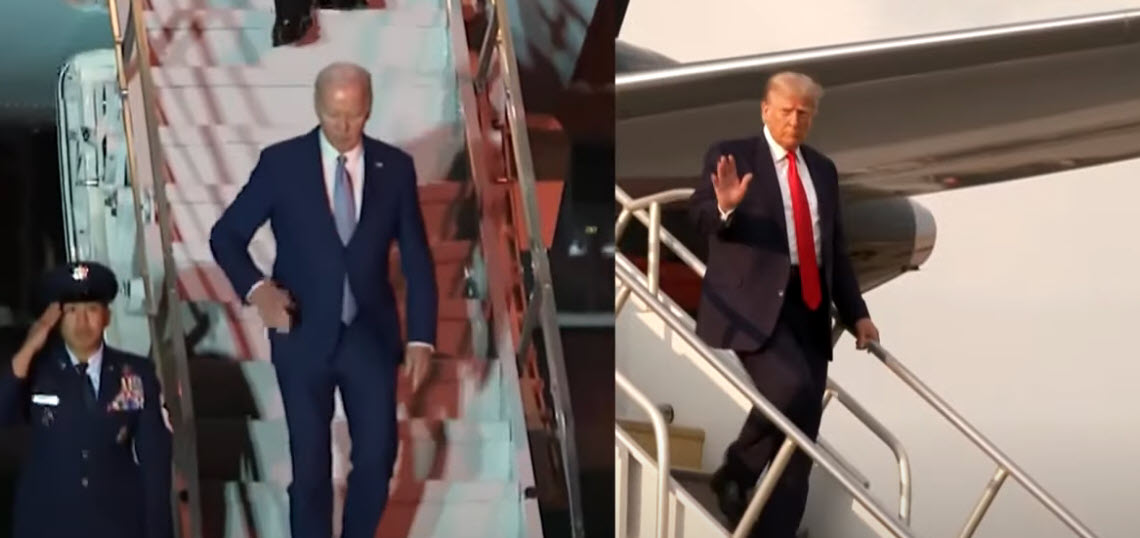
s the political landscape heats up, the Biden campaign is strategically setting its sights on a potential general election rematch between President Joe Biden and former President Donald Trump. Campaign manager Julie Chavez Rodriguez recently addressed reporters, highlighting the stark differences in the visions offered by the two leaders.
Rodriguez emphasized that American voters now confront two fundamentally distinct paths for the future of the country. She accused Trump of framing his campaign around themes of “revenge and retribution,” contrasting it with what the Biden campaign sees as a more inclusive and forward-looking agenda.
One of the key points of contention raised by Rodriguez is the perception of Republicans rallying behind what she termed an “extreme” frontrunner. This characterization underscores the Biden campaign’s strategy to portray Trump and his potential nomination as representative of an ideological shift within the Republican Party.
The Biden campaign is sounding a warning about the upcoming election, asserting that democracy and personal freedoms are at stake. By framing the election as a pivotal moment for the nation’s trajectory, the campaign aims to energize its base and attract voters who may be swayed by the perceived risks associated with an opposition victory.
As political dynamics evolve, the Biden team is positioning itself as the advocate for a more moderate and unifying approach, directly contrasting it with what they depict as a divisive and retaliatory strategy from the Trump camp.
In conclusion, the Biden campaign’s strategic focus on a potential rematch with Trump is evident in its efforts to highlight the competing visions for the country. By framing the election as a choice between unity and division, the campaign aims to shape the narrative and mobilize support for its agenda.

