

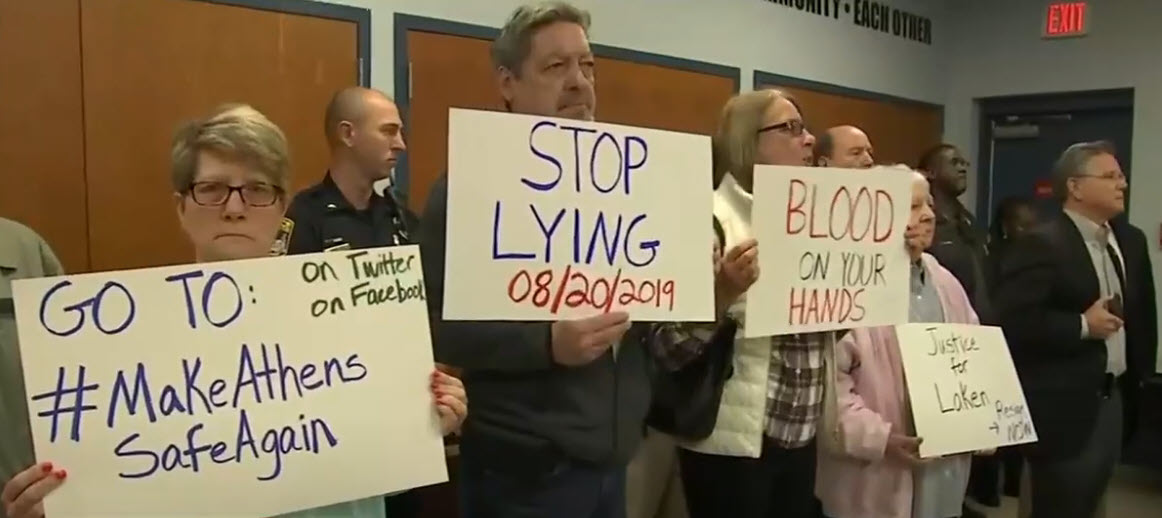
Tensions ran high in Athens, Georgia, as a group of protesters vehemently demanded the resignation of Mayor Kelly Gritz, holding him responsible for the murder of University of Georgia student Laken Riley. The emotionally charged scene unfolded during a news conference, where residents shouted over the mayor, accusing him of having “blood on [his] hands” in connection to the tragic incident.
The protest, which intensified on Tuesday and continued into Wednesday, saw residents expressing their outrage over the arrest of an illegal immigrant from Venezuela in connection to the death of nursing student Laken Riley. As Mayor Gritz attempted to address the public during the news conference, the protesters disrupted the proceedings, making it clear they held him accountable for the perceived lapse in safety.
A man among the protesters yelled directly at Mayor Gritz, accusing him of guilt in the murder and stating, “You’re the one who is guilty and got blood on your hands for this murder, sir!” Meanwhile, other demonstrators in the room held signs that conveyed their frustration, bearing messages such as “Blood on your hands” and “Make Athens safe again.”
The arrest of the suspect, an illegal immigrant from Venezuela, intensified the existing debate over immigration policies and public safety. The tragic incident involving the murder of Laken Riley has become a focal point for those advocating for stricter measures and heightened security in the community.
The protesters’ demands for Mayor Gritz’s resignation underscore the depth of public anger and frustration surrounding the handling of safety concerns in the wake of the UGA student’s murder. The mayor now faces significant pressure to address the community’s concerns and outline steps for enhancing safety measures.
The incident and subsequent protests have reignited debates around immigration, law enforcement, and community safety. The murder has become a symbol of broader issues, prompting discussions about the responsibilities of local leaders and the need for effective policies to ensure public security.
As the community grapples with the aftermath of the tragic event, the protests signify a broader sentiment of discontent and a call for accountability. The coming days are likely to see continued discussions, debates, and potential developments in response to the escalating unrest.
The outcry against Mayor Gritz and the impassioned protests in Athens highlight the complex intersection of immigration, public safety, and leadership responsibilities. The community’s demand for change and accountability underscores the profound impact of tragic events on local dynamics.

