

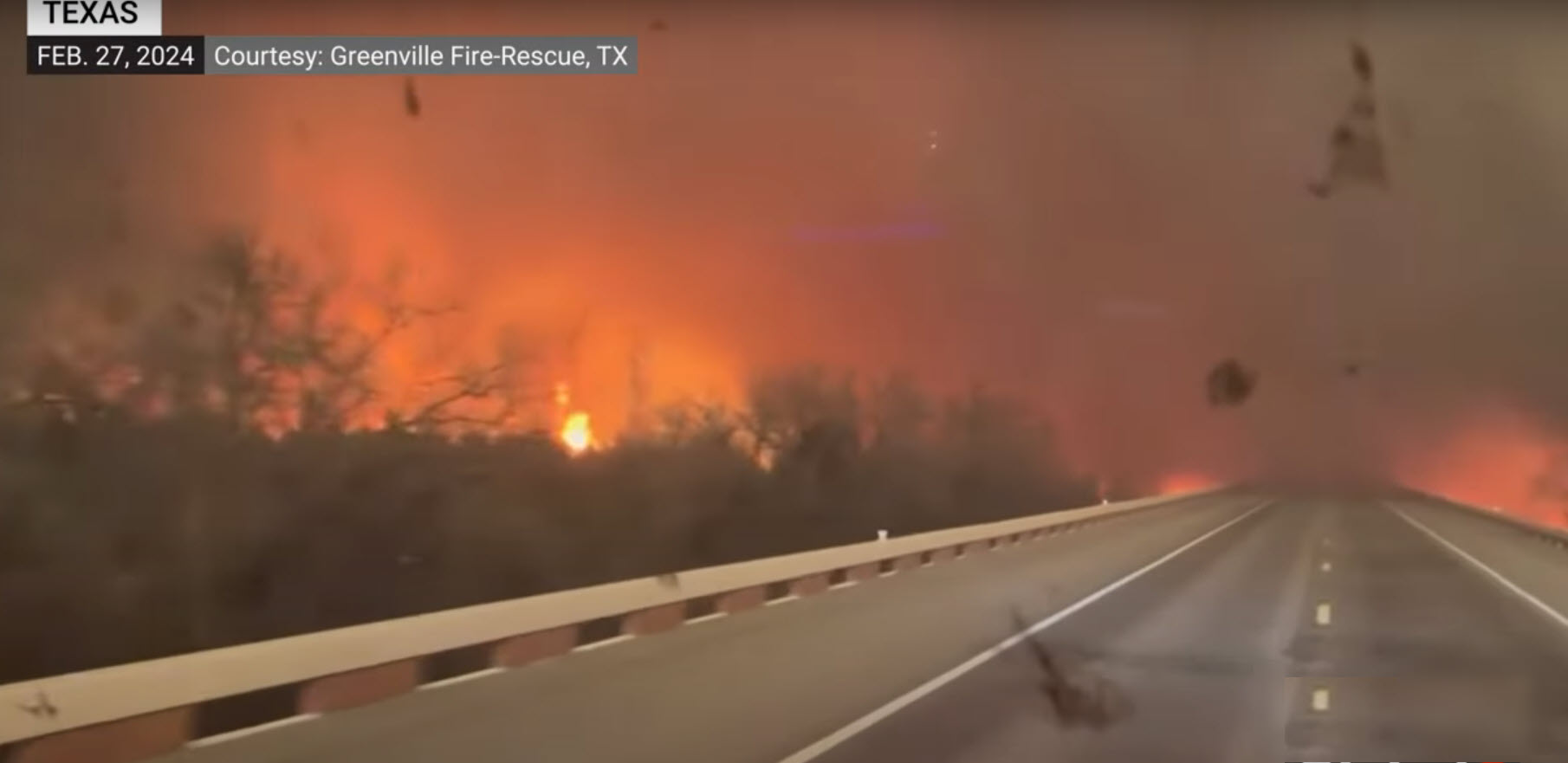
The Smokehouse Creek wildfire, ravaging the Texas Panhandle, has surged to become the second-largest wildfire in the state’s history, consuming over 500,000 acres in just 48 hours. This unprecedented wildfire poses a severe threat to communities, homes, and critical infrastructure, prompting a swift response from emergency services and raising concerns about containment.
The Texas A&M Forest Service reported that the Smokehouse Creek wildfire has rapidly expanded, fueled by challenging weather conditions and dry vegetation. The fire originated north of Stinnett and swiftly moved eastward along the Canadian River, leaving destruction in its wake. As of the latest update, the wildfire remains zero-percent contained.
Homes have been destroyed, power lines engulfed, and a nuclear weapon manufacturing facility is under threat, intensifying the urgency of containment efforts. The blaze has prompted the evacuation of several small towns, with Fritch bearing a significant brunt as dozens of homes and vehicles succumb to the flames.
In response to the escalating crisis, Governor Greg Abbott has issued a disaster declaration for 60 affected counties, emphasizing the need for coordinated and comprehensive emergency measures. Thirteen school districts within the wildfire’s path have canceled classes, prioritizing the safety of students and residents. Shelters across the Panhandle have been opened to accommodate those displaced by the fire.
First responders, including firefighters and emergency personnel, are on the front lines battling the blaze. Max Dunlap, who heads the Amarillo Office of Emergency Management, highlighted the extreme conditions faced by these responders. The combination of challenging weather, rapid fire spread, and the sheer scale of the wildfire presents a formidable challenge to containment efforts.
As the crisis unfolds, communities affected by the Smokehouse Creek wildfire are rallying together, demonstrating resilience in the face of adversity. The collaborative efforts of emergency services, community volunteers, and local authorities are crucial in addressing the immediate impacts and planning for long-term recovery.
The coming days will be critical in determining the trajectory of the Smokehouse Creek wildfire. Favorable weather conditions, additional firefighting resources, and community support will be pivotal in curbing the blaze’s advance and safeguarding lives and property.
The Smokehouse Creek wildfire’s rapid escalation to become the second-largest wildfire in Texas history underscores the urgency of addressing the growing threat of wildfires in the region. As emergency services work tirelessly to contain the blaze, the incident serves as a stark reminder of the importance of proactive measures, community preparedness, and ongoing efforts to mitigate the impacts of wildfires.

