

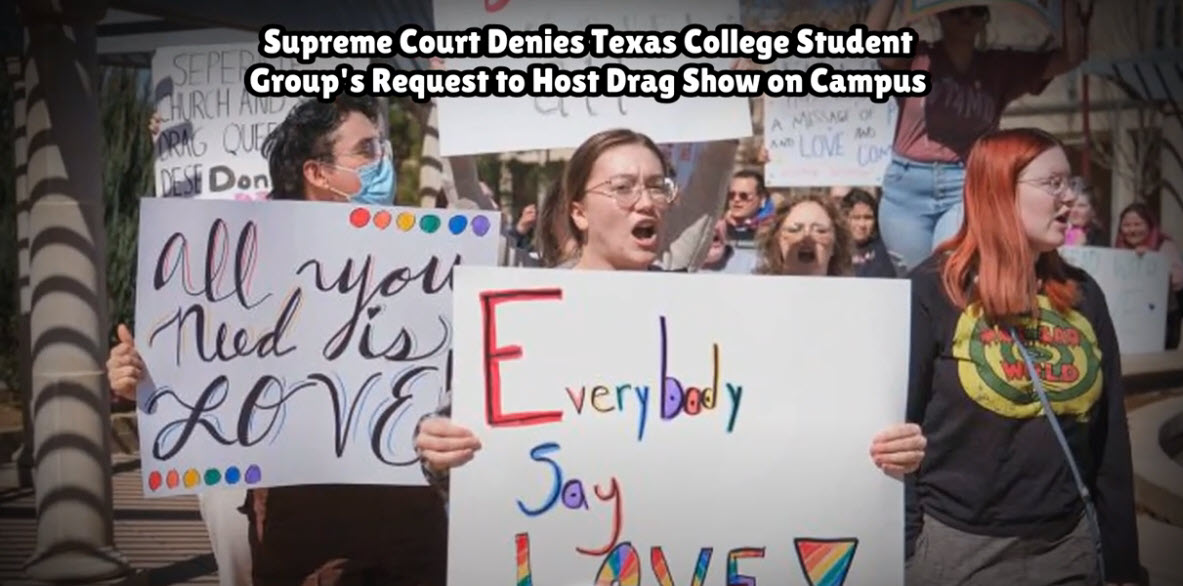
In a recent development at West Texas A&M University in Canyon, Texas, a student group’s efforts to host a drag show on campus have hit a roadblock. Despite their advocacy for free speech rights, the planned event has been blocked by the school’s president, leading to legal action and a subsequent denial of an emergency request by both a district judge and the Supreme Court.
The drag show, originally scheduled for next month, faced opposition from university administration, citing concerns that the event may not align with the institution’s values or mission. Organizers of the event argued that the decision to block the drag show constitutes a violation of free speech rights guaranteed by the First Amendment.
In response to the university’s decision, the student group pursued legal action by filing a lawsuit seeking an emergency injunction to allow the drag show to proceed. However, their efforts were met with disappointment as both a district judge and the Supreme Court denied their emergency request, upholding the university’s decision to prohibit the event.
The legal battle surrounding the drag show has now shifted to the federal appeals court, where arguments are scheduled to take place next month. This upcoming hearing marks a pivotal moment in the ongoing dispute, as the appeals court will evaluate the constitutional and legal implications of the university’s decision and the students’ right to freedom of expression.
The case has sparked broader discussions about the intersection of free speech, LGBTQ+ rights, and campus policies regarding controversial or culturally sensitive events. Supporters of the drag show argue that it serves as a platform for artistic expression, diversity, and inclusion, while opponents raise concerns about the appropriateness of such events within an academic setting.
The outcome of the legal proceedings before the federal appeals court will have significant ramifications for the protection of free speech rights on college campuses and the boundaries of institutional authority in regulating student-led activities and events.
As the case unfolds, it underscores the complexities and nuances of navigating issues related to free speech, diversity, and cultural sensitivity within the context of higher education institutions.

