

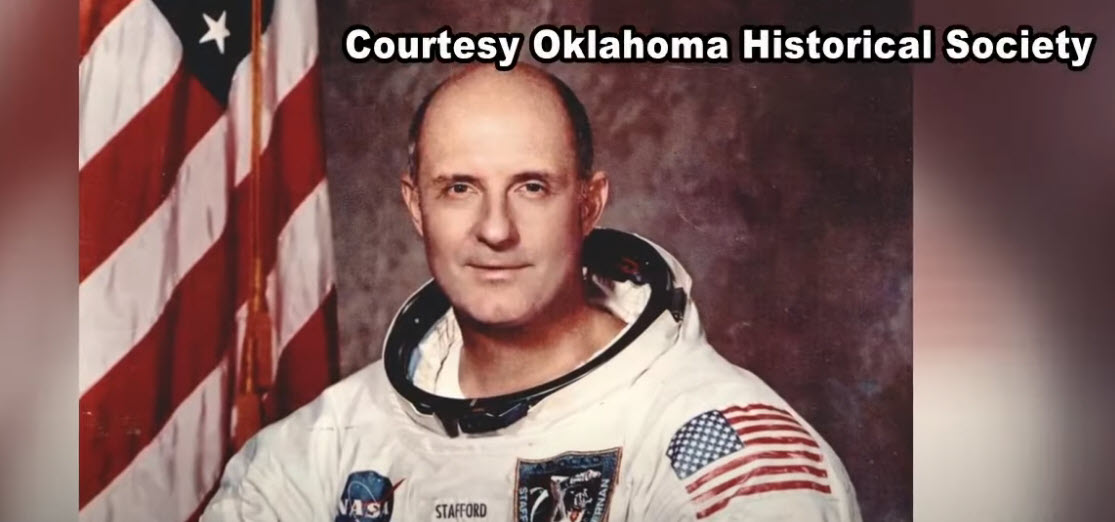
The space exploration community mourns the loss of a legendary figure as former NASA astronaut Thomas Stafford passed away at the age of 93. The news of his death was announced today by the Stafford Air and Space Museum in Weatherford, Oklahoma, which serves as a testament to his remarkable legacy.
Thomas Stafford, a native of Weatherford, was a pioneer in the field of space exploration, contributing significantly to NASA’s early missions and the advancement of human spaceflight. Max Ary, the museum director, confirmed that Stafford died after battling an extended illness, marking the end of an era for space enthusiasts and historians alike.
Stafford’s career was marked by extraordinary achievements and milestones. He was one of the astronauts selected for NASA’s second group in 1962, known as the “New Nine,” joining the ranks of space exploration alongside luminaries like Neil Armstrong and Buzz Aldrin. Stafford played crucial roles in several historic missions, including the Gemini and Apollo programs.
One of Stafford’s most notable missions was the Gemini 6A flight in 1965, during which he and fellow astronaut Walter Schirra performed the first-ever rendezvous in space with another spacecraft, Gemini 7. This achievement paved the way for future space docking maneuvers critical to the Apollo lunar missions.
In 1969, Stafford served as the commander of Apollo 10, NASA’s “dress rehearsal” for the Apollo 11 moon landing. He and his crew flew within just a few miles of the lunar surface, testing the lunar module’s capabilities and gathering vital data for the historic moon landing that followed.
Throughout his career, Stafford garnered widespread admiration for his exceptional piloting skills, leadership qualities, and contributions to space exploration technology. His dedication and courage inspired generations of astronauts and space enthusiasts worldwide.
The passing of Thomas Stafford marks the end of an era in space exploration history, but his legacy as a trailblazing astronaut and a visionary leader will continue to inspire future generations of space explorers and scientists.

