

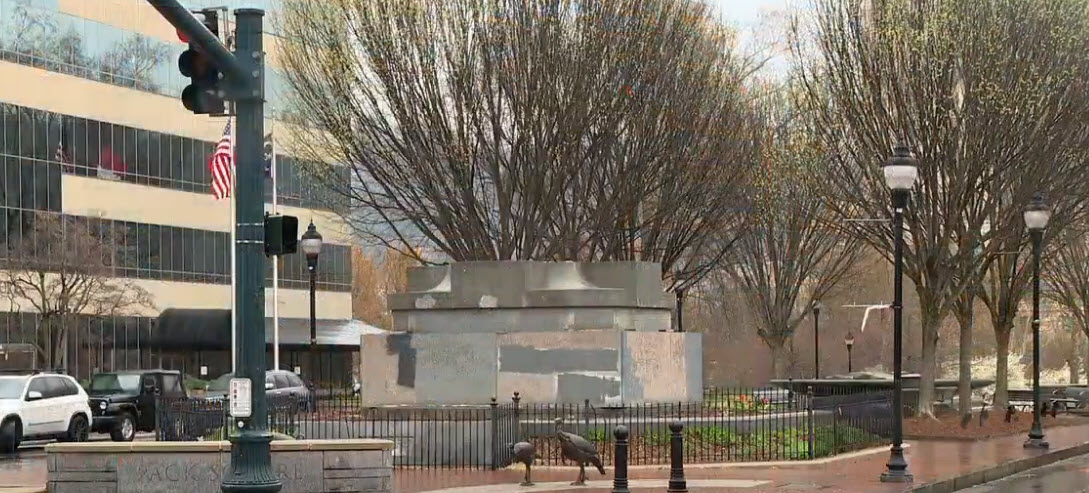
The contentious battle over downtown Asheville’s Confederate statue has reached its conclusion, marking a significant milestone in North Carolina’s history. After years of debate and legal challenges, the Vance Monument, a symbol of the Confederacy, has been largely dismantled, leaving only its base behind.
The decision to remove the Confederate statue, which has stood in Pack Square Plaza since 1898, was met with both praise and opposition. Advocates for racial justice and historical accuracy have long called for the statue’s removal, citing its association with a painful and divisive chapter in American history. The monument’s defenders, however, argued for its preservation as a symbol of heritage and tradition.
The legal battle intensified when a historical preservation group filed a lawsuit to prevent the statue’s removal. However, on Friday, the North Carolina Supreme Court delivered a decisive ruling, rejecting the lawsuit and paving the way for the monument’s dismantling.
The Mayor expressed optimism about the future use of the space, emphasizing plans to transform it into a symbol of inclusivity and unity. The removal of the Confederate statue represents a step towards acknowledging and honoring the diverse perspectives and experiences within the community.
While many residents and activists welcomed the removal of the statue as a step towards progress and reconciliation, some expressed disappointment and frustration with the court’s decision. The debate surrounding Confederate symbols continues to evoke strong emotions and debates across the nation.
The resolution of the Confederate statue controversy in Asheville reflects broader discussions about historical symbols and their significance in modern society. It underscores the ongoing efforts to address issues of racial equity, historical representation, and community identity.
As North Carolina moves forward, the removal of the Confederate statue serves as a reminder of the complex and evolving nature of historical narratives and the importance of engaging in constructive dialogue to shape a more inclusive future.

