

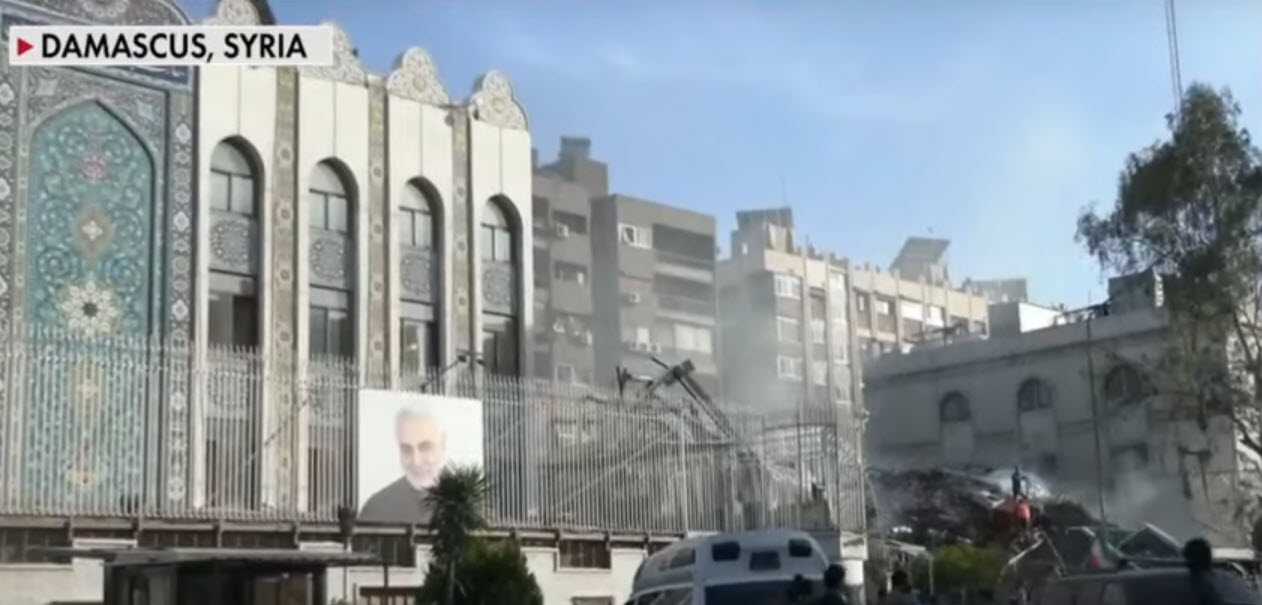
The already volatile Middle East erupted further today as Israel launched a daring airstrike near the Iranian embassy in Damascus, Syria. Early reports indicate the target was a high-ranking Iranian military commander, potentially escalating tensions between the two nations.
The White House confirmed it is closely monitoring the situation and reviewing reports of the slain commander, who was allegedly affiliated with the Iranian Revolutionary Guard Corps (IRGC). The strike comes amidst the ongoing conflict between Israel and Hamas in Gaza, raising concerns of a wider regional conflagration.
Israeli Prime Minister Benjamin Netanyahu defended the airstrike, claiming it targeted an individual “actively coordinating support for Hamas’ recent attacks on Israel.” This statement has not been independently verified.
Iranian officials have condemned the attack, vowing a “swift and forceful” response. The potential death of a senior military figure could significantly raise the stakes in the ongoing regional conflict.
The international community is scrambling to contain the crisis. The United States has urged both sides to exercise restraint, while the United Nations Security Council is expected to convene an emergency meeting in the coming hours.
Adding another layer of complexity, Israel recently passed a law granting authorities the power to shut down foreign news outlets deemed a threat to national security. Prime Minister Netanyahu has specifically targeted Al Jazeera, the Qatari-based news network, accusing it of bias and inciting violence. The Biden administration has expressed concern about the law, emphasizing the importance of a free press.
The coming days and weeks will be crucial in determining the trajectory of this developing crisis. Whether Iran retaliates for the alleged killing of its commander and how Israel responds will significantly impact regional stability.

