

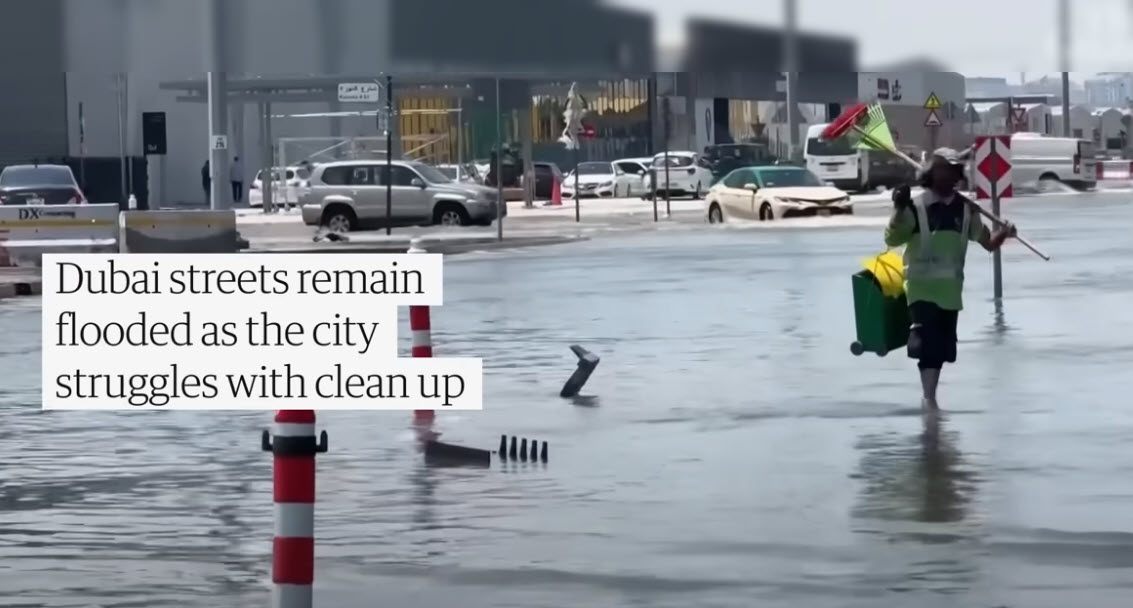
Dubai, United Arab Emirates (UAE) – Dubai is facing significant challenges in the aftermath of a historic flooding event earlier this week. The region experienced an unprecedented 10 inches of rain, marking the most substantial rainfall in 75 years. This deluge has had far-reaching consequences, including the closure of schools, extensive damage to homes, and disruptions at Dubai International Airport, one of the world’s busiest aviation hubs. Although the airport is gradually reopening, the city continues to grapple with the aftermath of this natural disaster.
The streets of Dubai remain inundated with floodwaters, posing ongoing challenges for residents and authorities alike. The torrential rain paralyzed transportation networks, with Dubai airport forced to ground flights and shut down its terminals temporarily. The impact on daily life has been immense, with many residents struggling to navigate through waterlogged roads and flooded areas.
Despite these challenges, Dubai’s resilience is evident as communities come together to address the crisis. Some individuals have taken initiative, using kayaks to rescue stranded residents and provide assistance where needed. This grassroots response highlights the spirit of solidarity and cooperation in times of adversity.
The unprecedented rainfall in Dubai is part of a broader weather pattern affecting the region, with neighboring countries also experiencing heavy rain and related consequences. In Oman, tragic losses were reported, including the deaths of 20 individuals, including schoolchildren, in a vehicle swept away by floodwaters.
The question on many minds is what led to this extraordinary storm in a region known for its arid climate and minimal rainfall. Experts are investigating the factors behind this weather anomaly, including potential influences from global climate patterns and local atmospheric conditions. Understanding the causes will be crucial for future preparedness and mitigation efforts.
As Dubai works towards recovery and restoration, the focus remains on supporting affected communities, repairing infrastructure, and implementing measures to prevent such catastrophic events in the future.

