

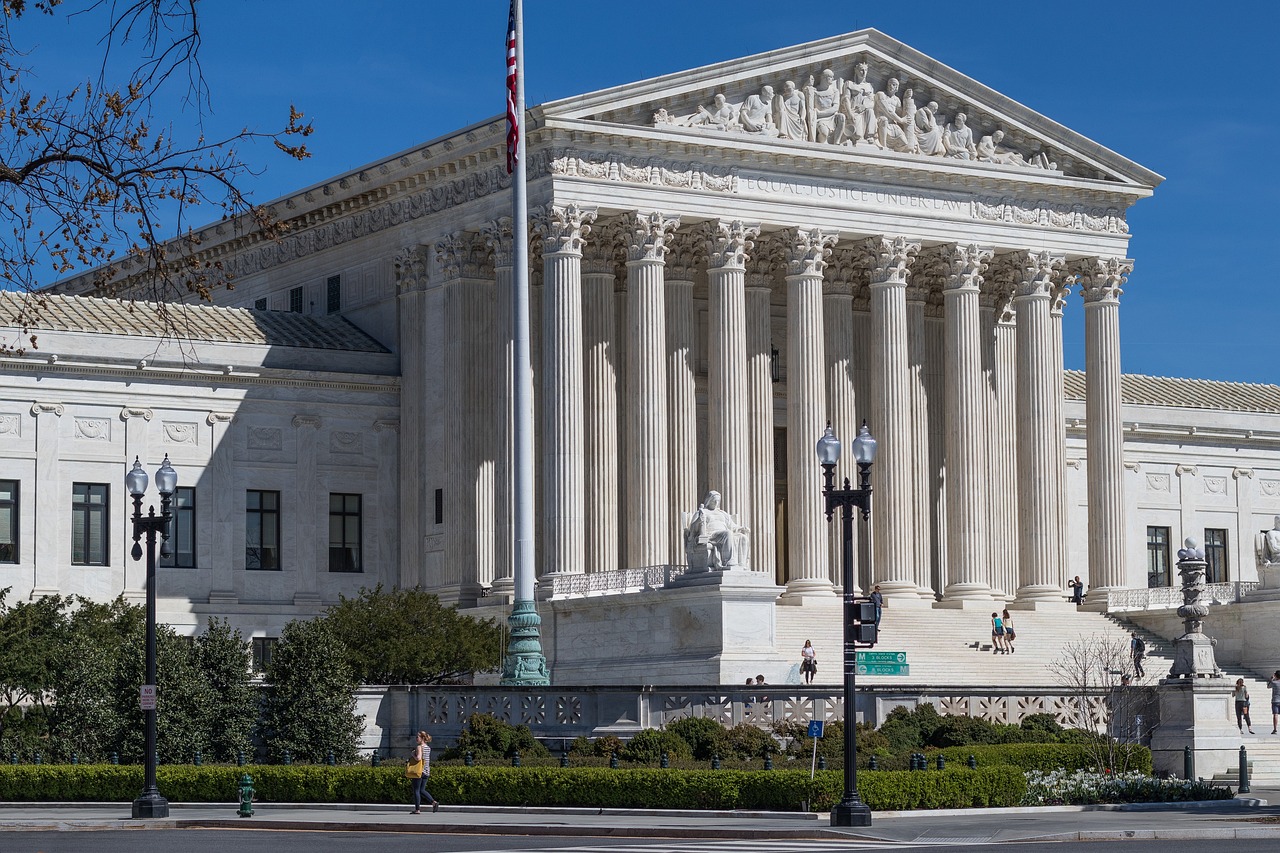
In a case that has captured national attention, the Supreme Court is set to rule on whether a man from Los Angeles can be denied a visa due to his tattoos, with potential implications for constitutional rights and immigration policies. Luis Acensio Cordero’s visa denial stemmed from federal agents’ belief that his tattoos linked him to the MS-13 gang, preventing him from reuniting with his wife, Sandra Munoz, who resides in Los Angeles.
The case highlights the intersection of immigration law, individual rights, and law enforcement practices. Cordero and Munoz have been separated for five years, with their legal battle centered on challenging the federal government’s decision and its impact on their constitutional rights to marriage and due process.
The legal saga began when Cordero, seeking to return to the U.S. from El Salvador, faced a visa denial based on suspicions related to his tattoos. The tattoos in question were deemed by federal agents as indicative of gang affiliation, particularly with MS-13, a notorious criminal organization. However, Cordero and Munoz argue that these assumptions are unfounded and have led to unjust consequences, depriving them of their fundamental rights.
Last year, the 9th Circuit Court of Appeals ruled in favor of Cordero and Munoz, highlighting concerns over potential violations of constitutional rights and procedural fairness. However, the Biden administration has appealed the decision to the Supreme Court, setting the stage for a pivotal legal showdown.
The Supreme Court’s decision is eagerly awaited as it could have far-reaching implications not only for Cordero and Munoz but also for individuals with tattoos and immigration statuses. The case delves into questions of profiling, cultural perceptions, and the extent of government authority in visa adjudications.
Legal experts and advocacy groups are closely monitoring the proceedings, emphasizing the broader implications of the case beyond the individual parties involved. The ruling is expected to provide clarity on the boundaries of immigration enforcement practices and the protection of constitutional rights in visa application processes.
As the case unfolds, it underscores the complexities and challenges inherent in immigration policies and enforcement, particularly concerning issues of identity, prejudice, and individual liberties.

