

Protests over the Israel-Hamas conflict are intensifying on college campuses nationwide, sparking tensions and leading to multiple arrests. The FBI has issued warnings about antisemitic threats of violence, particularly targeting Jewish students. This escalation reflects the deeply polarized views on the Israeli-Palestinian conflict, with passionate supporters on both sides voicing their concerns.
At Columbia University in New York, negotiations are ongoing between university leaders and pro-Palestinian demonstrators camped on campus. The encampment has drawn attention and raised questions about free speech boundaries and campus safety. University administrators have given protesters a deadline to clear out, citing concerns about disruption and the need to maintain a peaceful environment for all students.
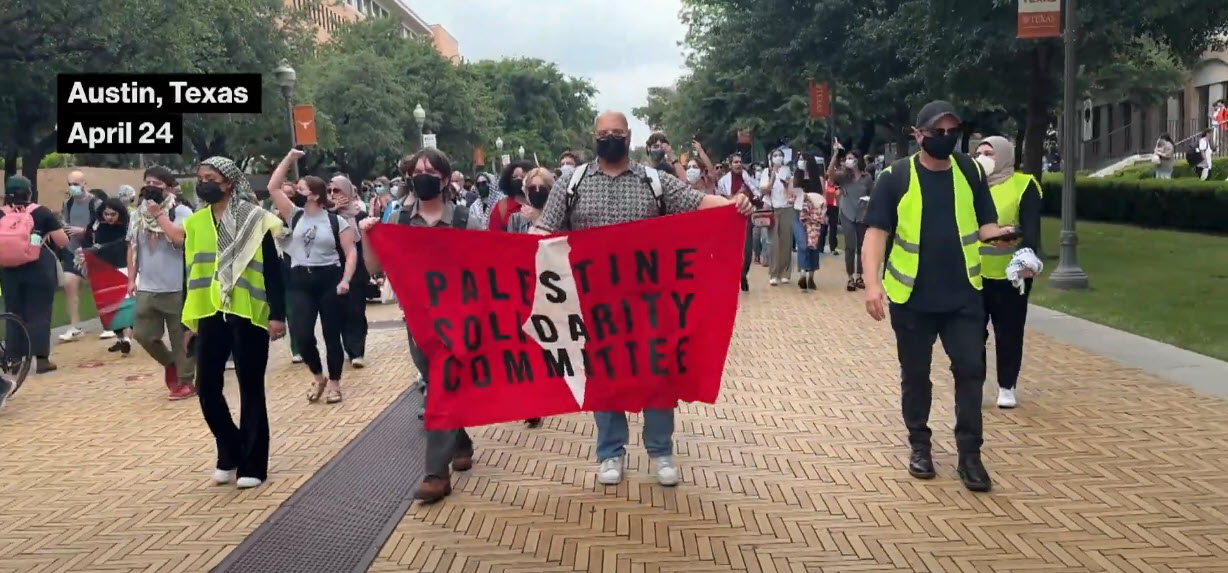
Meanwhile, in Texas, the University of Texas at Austin witnessed a significant police intervention as state troopers broke up a pro-Palestinian protest. The university’s president defended the action, citing violations of school rules and policies by the organizers. However, the arrests have sparked debates about the limits of protest rights on college campuses and the role of law enforcement in managing such demonstrations.
Faculty and staff at UT Austin also joined the protests, adding their voices to the calls for justice and peace in the Middle East. The chants against Israel’s policies echoed through the campus, highlighting the diverse opinions within academic communities regarding international conflicts.
Pro-Palestinian protesters who were arrested on the campus of UT Austin are being released after spending a night locked up. They were met with cheering as they walked out of the Travis County Jail before dawn. Texas State Troopers arrested at least 34-people on campus yesterday as part of an effort to break up the protest. Some of those released today said their charges were dropped or rejected and will not be prosecuted.
In California, pro-Palestinian students have set up encampments at UCLA and USC, leading to arrests and heightened tensions on both campuses. The clashes between demonstrators and law enforcement underscore the challenges universities face in balancing free expression with maintaining order and safety.
In response to these developments, Jewish faculty at Yale University are urging an end to pro-Palestinian protests, calling for the university to establish a deadline for their conclusion. They emphasize the need for constructive dialogue and a respectful environment for all students, regardless of their political views.
These ongoing protests and arrests reflect not just the complexities of the Israel-Hamas conflict but also the broader issues of free speech, campus safety, and peaceful coexistence within academic communities. The impact of these events extends beyond campus boundaries, highlighting the interconnectedness of global politics and local activism in today’s interconnected world.

