

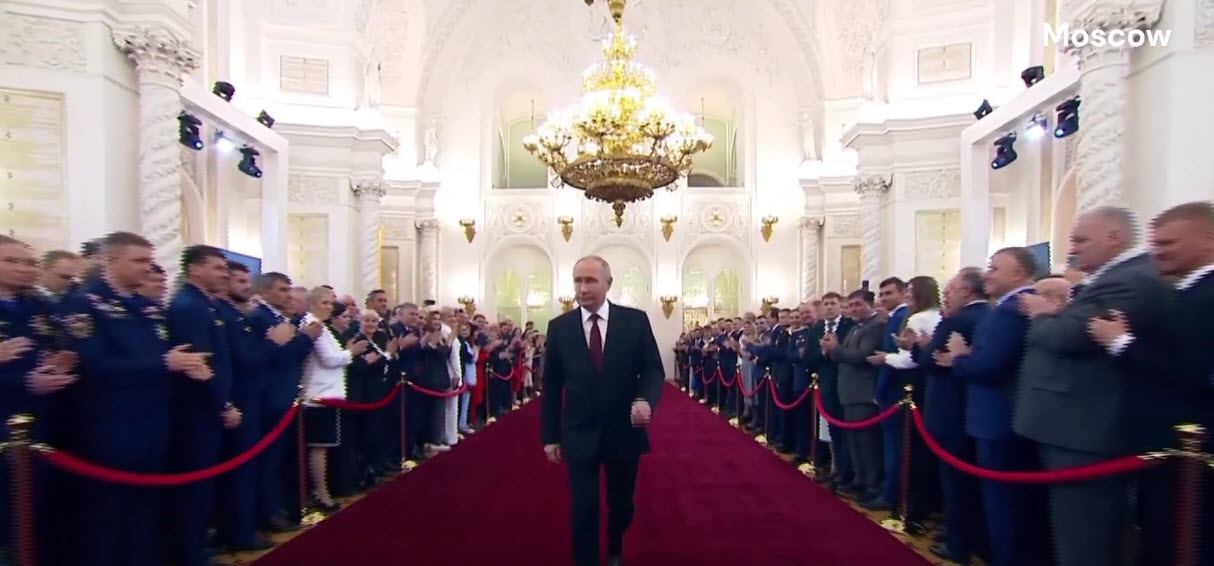
Russian President Vladimir Putin has been sworn into office for his fifth term during a ceremony at the Kremlin on May 7, marking nearly a quarter-century of his leadership. Despite significant international tensions, particularly with the United States and several Western nations who boycotted the event due to ongoing conflicts in Ukraine, Putin remains a pivotal figure in both Russian and global politics.
At 71, Putin’s reinauguration comes at a time when Russia is deeply involved in the Ukraine conflict, a situation that has significantly strained its relations with the West. In his inauguration speech, Putin conveyed a strong message to the West, asserting that Russia would emerge stronger from its current challenges and continue to resist what he describes as Western efforts to restrain Russia’s development.
Putin emphasized that while Russia is open to dialogue, it is up to Western countries to choose between continuing their aggressive stance or seeking cooperation and peace. He denounced the existing ‘unipolar’ world order dominated by Western powers and expressed his government’s readiness to end it, proposing a new era of multipolarity in which Russia plays a central role.
This new term promises to solidify Putin’s grip on power, as he continues to navigate the complexities of international diplomacy and domestic governance amidst widespread scrutiny and criticism.

