

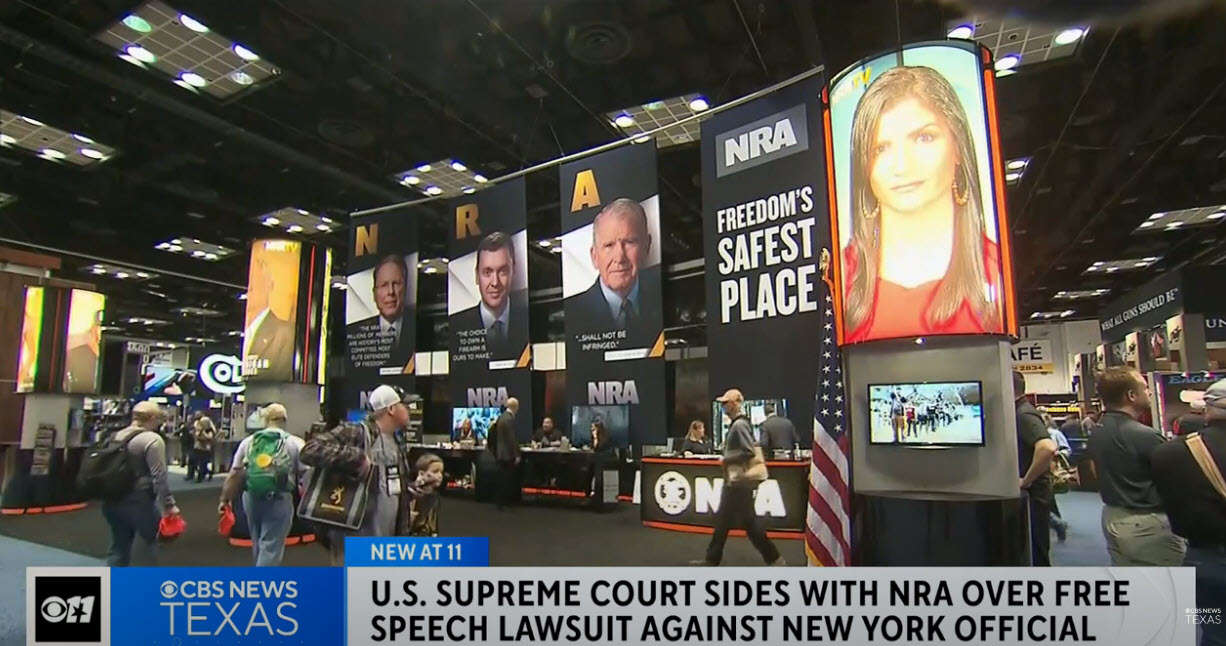
The Supreme Court today rules in favor of the National Rifle Association (NRA) in a high-profile free speech case involving the top financial regulator for New York State. The decision marks a significant victory for the NRA, reinforcing its position against state-level regulatory actions that it argues infringe on its constitutional rights.
The case centers around actions taken by New York’s Department of Financial Services (NYDFS), led by the state’s top financial regulator, which had sought to pressure financial institutions and insurance companies to cut ties with the NRA. The regulator’s efforts were part of a broader initiative to address concerns about the role of guns and gun rights organizations in public safety issues.
The NRA filed a lawsuit, claiming that the NYDFS’s actions amounted to a politically motivated campaign to silence the organization, thereby violating its First Amendment rights. The NRA argued that the regulator’s actions had a chilling effect on its ability to engage in free speech and advocate for gun rights.
In its ruling, the Supreme Court agrees with the NRA, concluding that the actions taken by New York’s financial regulator did indeed violate the NRA’s free speech rights. The justices find that the pressure exerted on financial institutions to sever ties with the NRA constituted an improper use of regulatory power aimed at suppressing a specific viewpoint.
The decision has far-reaching implications for the relationship between state regulators and advocacy organizations, particularly those engaged in politically sensitive issues. It underscores the court’s commitment to protecting free speech rights against government actions perceived as targeting specific groups for their beliefs.
New York’s financial regulator had argued that its actions were within its mandate to ensure the safety and soundness of the state’s financial system. However, the Supreme Court’s ruling suggests that regulatory actions must be carefully balanced against the constitutional protections afforded to speech and advocacy.
This landmark ruling is celebrated by the NRA and its supporters as a reaffirmation of their right to free speech and their ability to engage in advocacy without fear of retribution from government authorities. Meanwhile, critics of the decision express concern that it could limit the ability of state regulators to address issues related to public safety and financial stability when those issues intersect with powerful advocacy groups.
The ruling will likely influence future cases involving the intersection of free speech and regulatory actions, setting a precedent for how such disputes are adjudicated in the nation’s highest court.

