

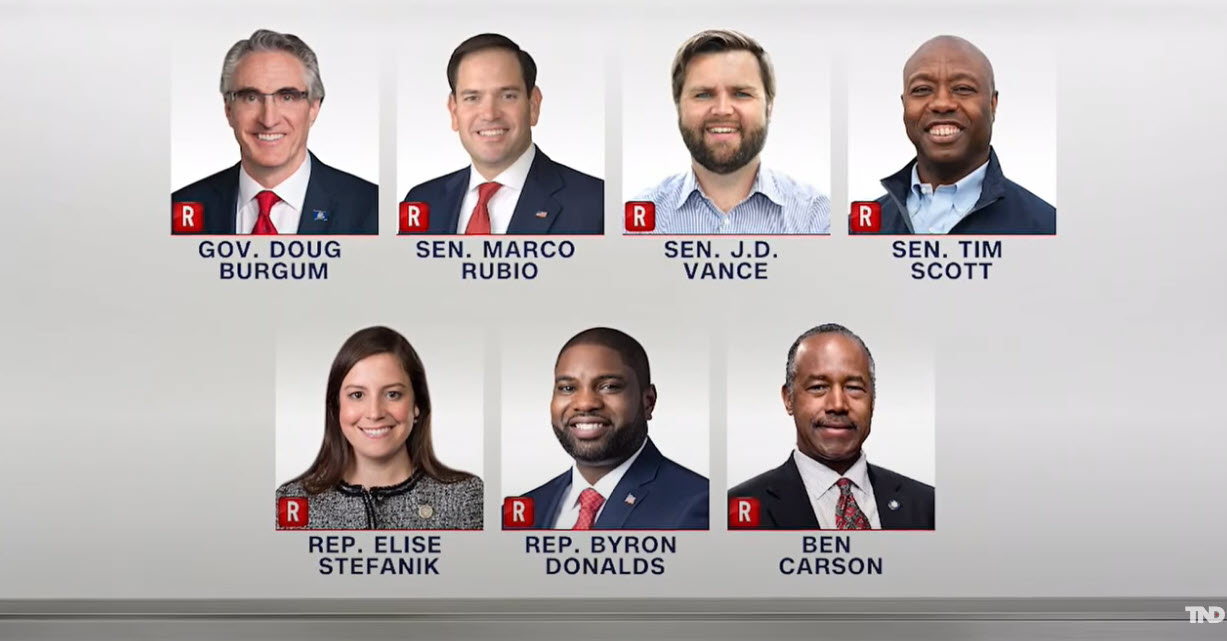
As the 2024 presidential race heats up, former President Donald Trump’s campaign has initiated the vetting process for potential vice-presidential candidates. Reports indicate that the focus is currently on four main contenders: Florida Senator Marco Rubio, South Carolina Senator Tim Scott, Ohio Senator JD Vance, and North Dakota Governor Doug Burgum. However, the shortlist is far from finalized, with additional names such as South Dakota Governor Kristi Noem, New York Congresswoman Elise Stefanik, former Housing and Urban Development Secretary Ben Carson, and Florida Congressman Byron Donalds also under consideration.
The Trump campaign has maintained secrecy around the selection process. In a recent statement, they asserted, “Anyone who tells you they know who, how or when President Trump will choose his VP is lying.” The Republican National Convention, where the final decision will likely be unveiled, is scheduled for July 15th through the 18th.
This vetting process comes at a time when public opinion on Trump remains deeply divided. According to a Gallup favorability poll conducted before Trump was found guilty on 34 felony counts in his New York hush money trial, Americans exhibit more polarized views towards Trump than President Joe Biden. The poll asked respondents to rate the two candidates on a scale from negative five to positive five. While both Biden and Trump received similar overall favorability ratings, Trump’s ratings were more extreme. Specifically, 40% of respondents reported very unfavorable views of Trump (negative four or five), compared to 35% for Biden. Conversely, 25% of respondents held highly favorable views of Trump, compared to 20% for Biden.
Despite the recent guilty verdict against Trump, fresh polling from Ipsos suggests that public sentiment has not significantly shifted. The electorate remains divided, with independent voters showing little change in their views regarding Trump, Biden, the 2024 election, and the criminal justice system.
In the midst of these developments, Trump continues to demonstrate his electoral strength. This underscores his enduring appeal to a significant portion of the American electorate, despite ongoing legal challenges and polarizing public opinion.

