

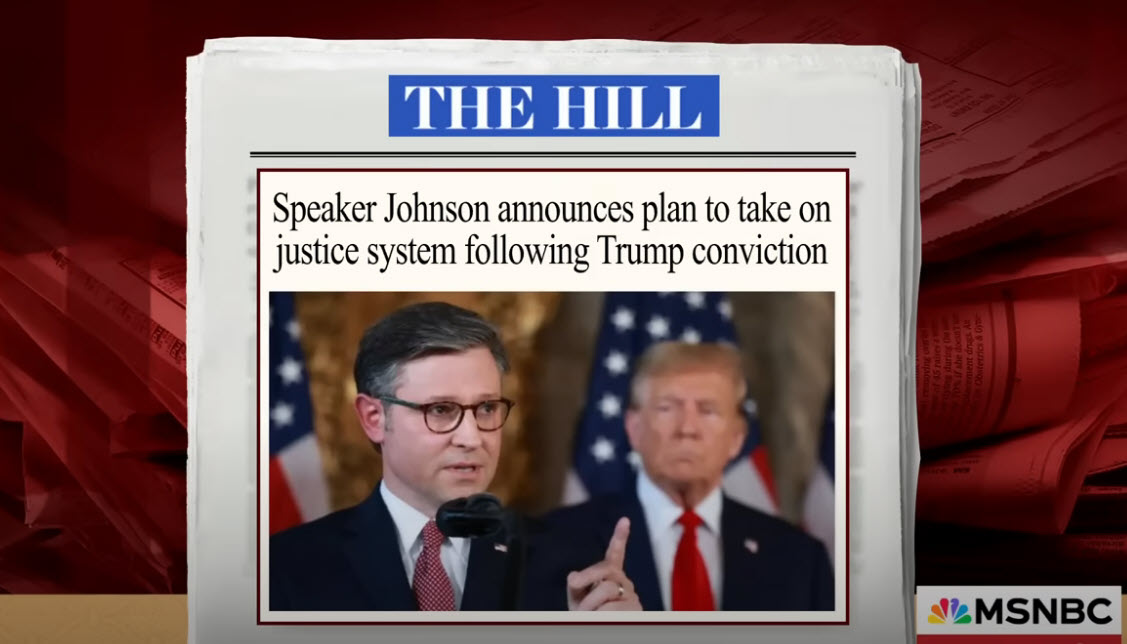
In the wake of former President Donald Trump’s recent conviction, House Speaker Mike Johnson is announcing a new plan aimed at taking on the Department of Justice (DOJ). The plan, detailed in a recent public address, includes measures to scrutinize and potentially curtail the DOJ’s actions, which Johnson and his allies argue have been politically motivated.
Johnson’s announcement comes amid significant developments involving Trump allies and their roles in ongoing legal and political battles. Two staunch Trump supporters, Congressmen Scott Perry and Ronny Jackson, have been appointed to the House Intelligence Committee by Speaker Johnson. This committee is tasked with overseeing the U.S. intelligence community and handling sensitive government material. Perry, who previously chaired the conservative House Freedom Caucus, was involved in efforts to keep Trump in office following the 2020 election. His phone and communication records were seized by the FBI in 2022 as part of the investigation into Trump’s attempts to interfere with the election certification process.
In a related move, Wisconsin has filed charges against three Trump allies accused of participating in election fraud. The Wisconsin Attorney General is charging attorney Kenneth Chesebro, former Trump lawyer Jim Troupis, and former Trump campaign official Michael Roman with a single count of forgery each. These charges are part of broader efforts by various states to hold accountable those allegedly involved in attempts to overturn the 2020 election results.
As Speaker Johnson mobilizes efforts to confront the DOJ, these legal battles and committee appointments underscore the continued influence of Trump and his allies within the Republican Party. The tension between the legislative and executive branches, particularly over issues of election integrity and judicial fairness, is likely to escalate as these cases progress.
Johnson’s plan is seen by many as a direct response to what he and his supporters view as an overreach by the DOJ. Critics argue that these actions are necessary to uphold the rule of law and ensure accountability for attempts to undermine democratic processes. The developments in Wisconsin further highlight the ongoing legal repercussions for those connected to the efforts to challenge the 2020 election results.
As the political landscape continues to shift, the actions taken by Speaker Johnson and the charges filed in Wisconsin will play a critical role in shaping the future of U.S. politics and the balance of power between the legislative and judicial branches.

