

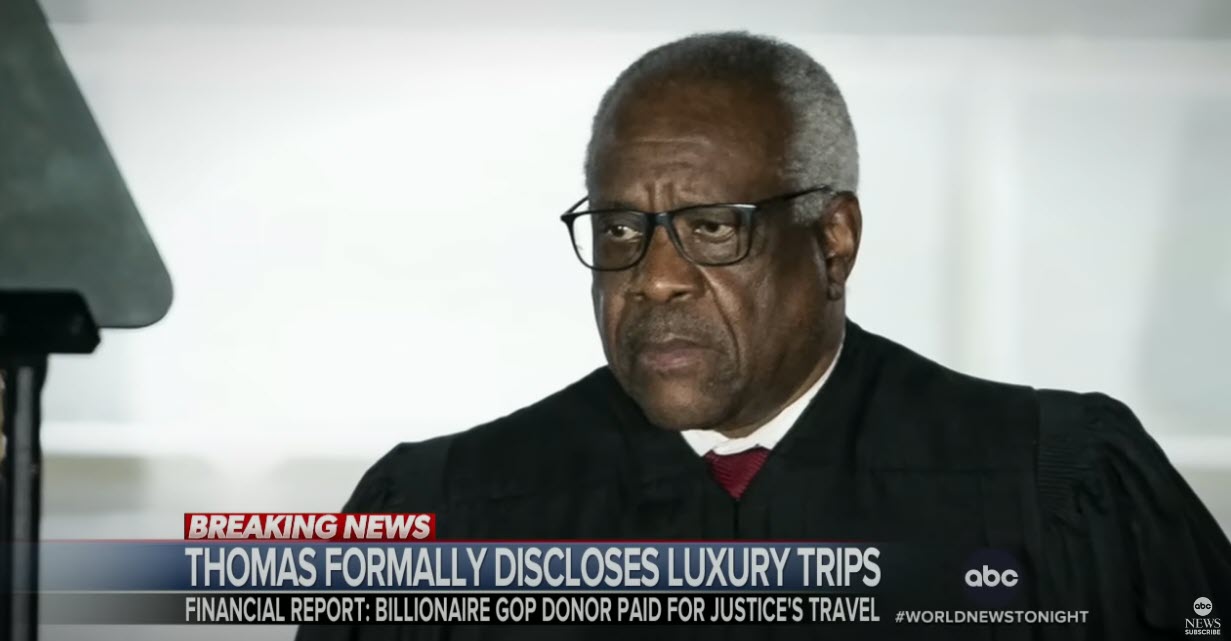
Supreme Court Justice Clarence Thomas has formally disclosed a 2019 trip that was paid for by GOP megadonor Harlan Crow. The vacation, initially reported by ProPublica, has been the focus of controversy and sparked renewed calls from Democrats for Supreme Court ethics reforms.
Justice Thomas’ disclosure comes after the trip was previously omitted from his annual financial reports, which he attributed to an “inadvertent omission.” The ProPublica report detailed how Crow, a prominent Republican donor, funded a lavish vacation for Thomas, raising concerns about potential conflicts of interest and the need for greater transparency in the judiciary.
In response to the disclosure, several Democratic lawmakers have reiterated their demands for comprehensive Supreme Court ethics reforms. They argue that the incident underscores the necessity for stricter rules governing the disclosure of gifts and travel expenses by Supreme Court justices.
The call for reforms includes proposals for a formal code of conduct for Supreme Court justices, similar to those that apply to other federal judges. Proponents of these reforms believe that such measures are essential to maintaining public trust in the highest court and ensuring that justices remain free from undue influence.
Justice Thomas’ formal disclosure has added to the ongoing debate about judicial accountability and transparency. While Thomas maintains that the omission was unintentional, critics argue that the lack of timely disclosure highlights a significant gap in the current system. They contend that all justices should be subject to the same ethical standards as other public officials.
The controversy over Thomas’ 2019 trip has also prompted discussions about the broader implications of undisclosed gifts and the potential for perceived conflicts of interest. Legal experts and ethicists emphasize the importance of clear and consistent disclosure practices to uphold the integrity of the judiciary.
As the debate over Supreme Court ethics continues, it remains to be seen whether the incident will lead to substantive changes in the rules governing judicial conduct. However, the increased scrutiny on the financial activities of justices may push forward legislative efforts aimed at enhancing transparency and accountability.

