

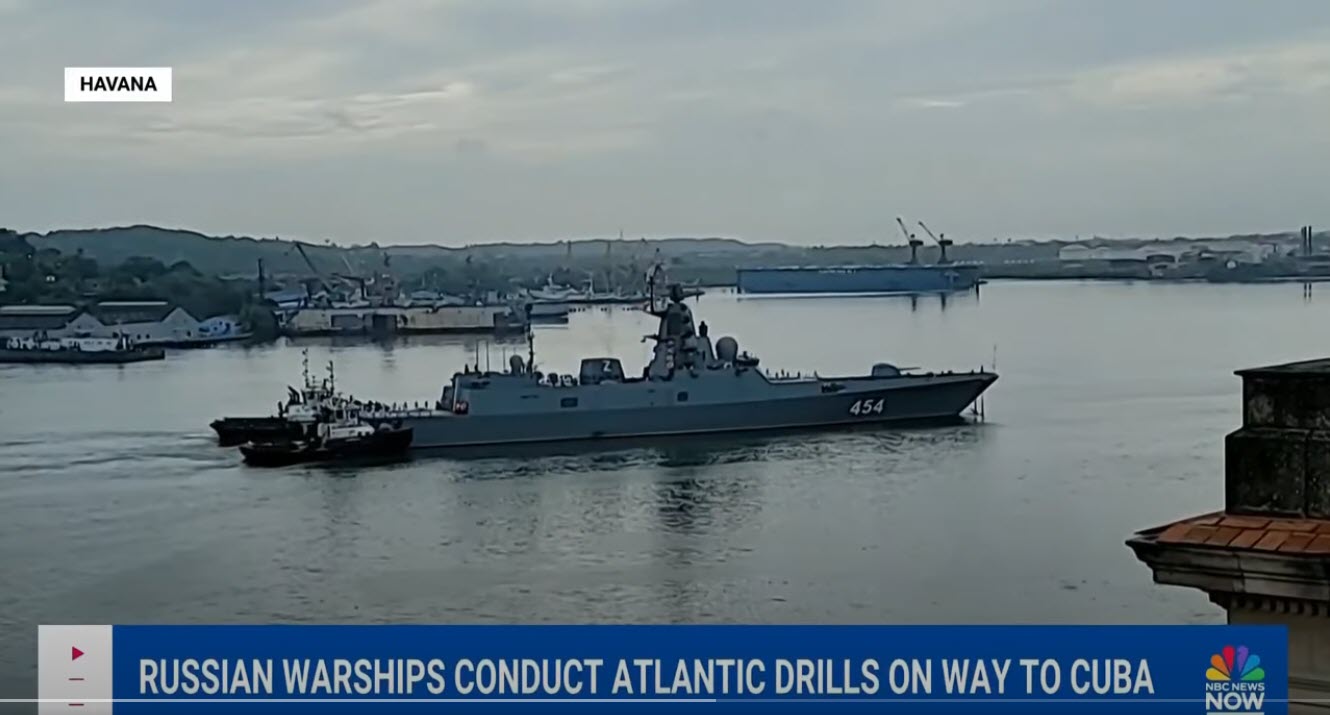
Russian warships have arrived off the coast of Cuba for a scheduled visit, marking a significant moment in the ongoing relationship between the two nations. The Russian frigate and submarine were greeted with honorary cannon fire from Havana harbor on Wednesday morning, highlighting the ceremonial nature of their arrival.
The presence of the Russian naval vessels is seen as a demonstration of solidarity and strength by Russia, a longstanding ally of Cuba. Despite the show of force, both the United States and Cuba have stated that the visit poses no threat. Prior to their arrival, the ships conducted “high-precision missile weapons” training in the Atlantic Ocean, showcasing their capabilities in a display that has drawn international attention.
Throughout their journey, the U.S. has closely monitored the Russian ships, especially as they sailed near the Florida coast. The heightened surveillance reflects the strategic interest and vigilance of the U.S. regarding military movements in the region.
The Russian warships are scheduled to remain in Havana until June 17th. During this period, they are expected to engage in various activities, including diplomatic events and possible joint exercises with Cuban naval forces. This visit underscores the enduring military and diplomatic ties between Russia and Cuba, which have persisted despite global political shifts and tensions.
The arrival of the warships comes at a time of complex international dynamics, where displays of military cooperation can send powerful messages to global audiences. The event is being closely watched by analysts and policymakers as an indicator of Russia’s military reach and its ongoing partnerships in the Western Hemisphere.
As the ships stay in Havana, the visit is likely to include a series of formal and informal interactions, aiming to strengthen the strategic bond between the two nations. The developments are being carefully observed by the international community for any potential implications on regional stability and geopolitical alignments.

