

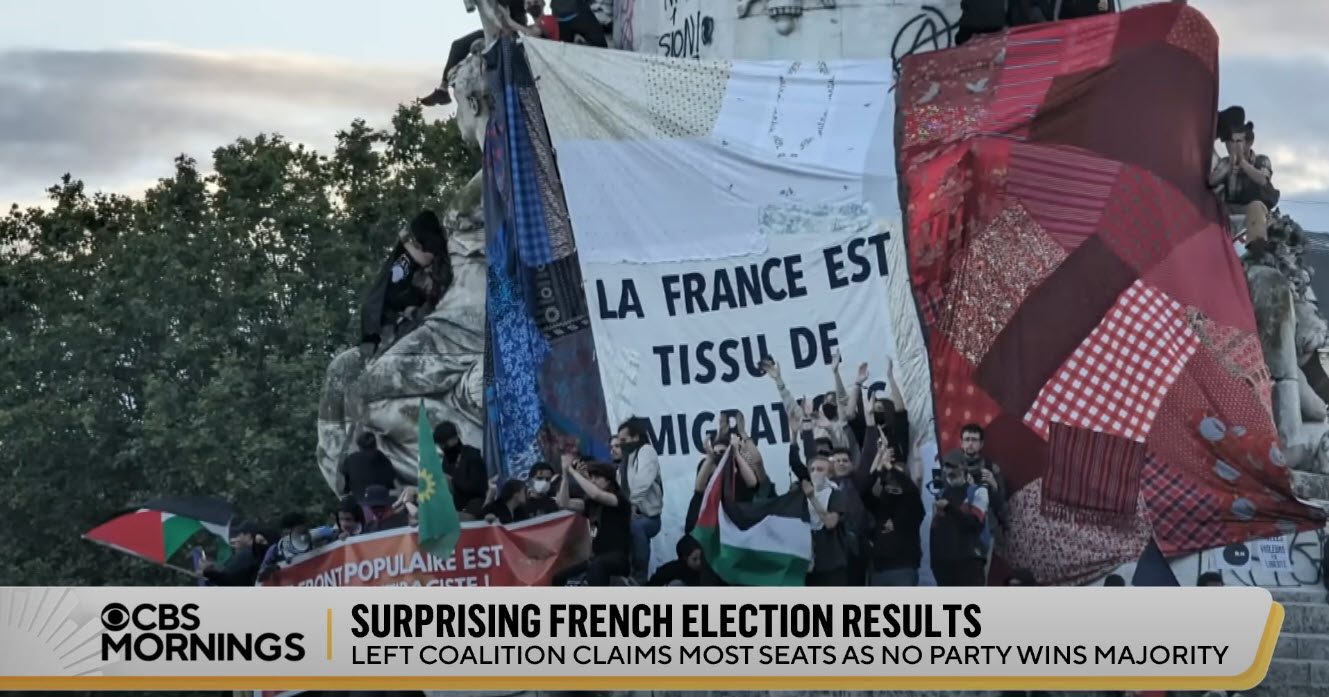
As France heads to the polls, the nation braces for a potential political stalemate with predictions indicating a divided parliament. The closely contested election reflects deep-seated divisions within French society, making it increasingly likely that no single party will secure a clear majority.
Polling data and political analysts suggest that President Emmanuel Macron’s centrist party, La République En Marche!, will struggle to retain a decisive hold on the National Assembly. Meanwhile, rival parties on both the left and right are poised to make significant gains, setting the stage for a fragmented legislative body.
The anticipated deadlock in parliament is expected to complicate the legislative process, making it challenging for any single party to pass laws without forging coalitions. This scenario could hinder Macron’s ability to implement his reform agenda, which includes economic restructuring, climate policies, and social welfare initiatives.
Marine Le Pen’s far-right National Rally and Jean-Luc Mélenchon’s far-left France Insoumise are both projected to increase their representation significantly. This surge highlights the electorate’s growing disillusionment with mainstream politics and a shift towards more polarized viewpoints.
Macron, who was re-elected earlier this year, faces mounting pressure to navigate this complex political landscape. In a recent address, he called for unity and cooperation, urging all parties to work together for the nation’s benefit. However, the deep ideological rifts suggest that consensus-building will be a formidable challenge.
The potential for a hung parliament raises questions about the future of France’s political stability and its ability to address pressing issues. Key policy areas such as immigration, healthcare, and economic recovery post-pandemic may see protracted debates and gridlock, delaying crucial decisions.
As the election results unfold, the international community is watching closely, with implications for the European Union and global markets. France, being a pivotal player in European politics, will need to demonstrate resilience and adaptability in the face of internal political fragmentation.

