

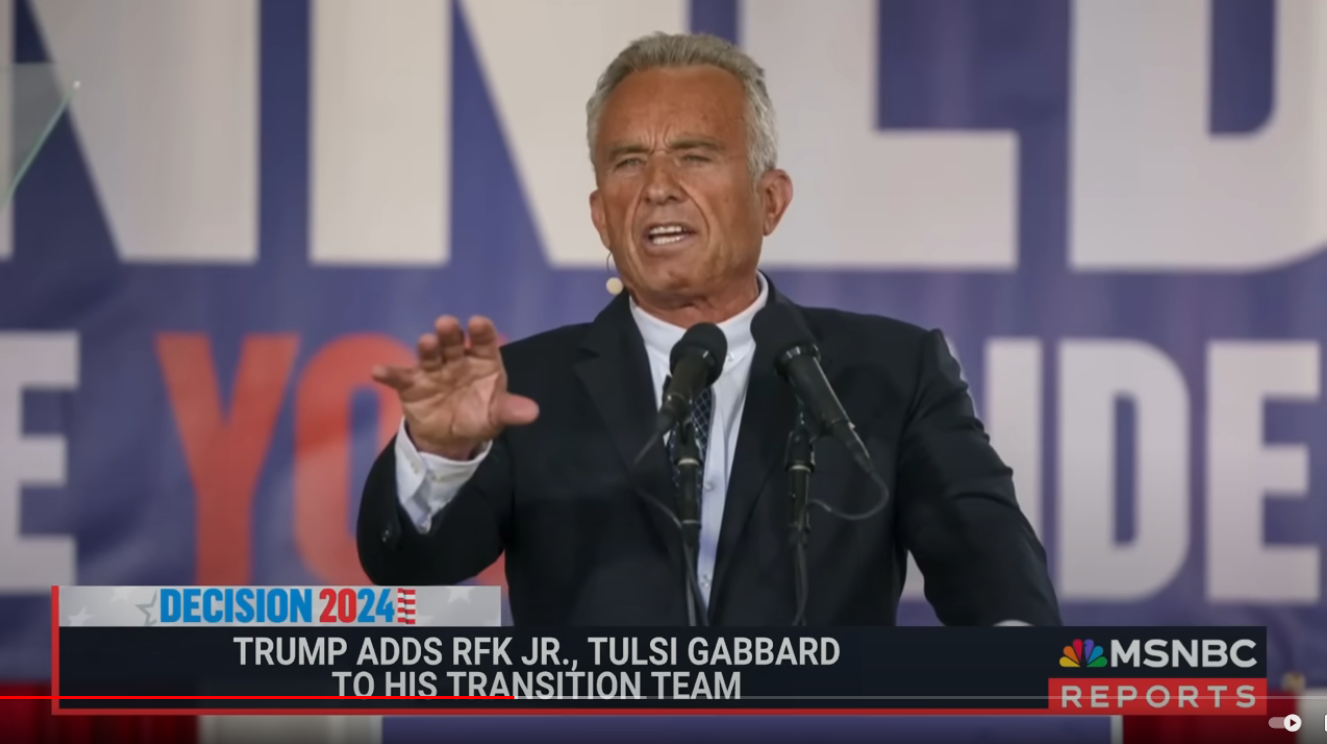
Former President Donald Trump is making waves in the political arena by adding two high-profile former Democrats to his presidential transition team. Robert F. Kennedy Jr. and former Congresswoman Tulsi Gabbard have joined the ranks of Trump’s advisors, signaling a potential shift in the campaign’s strategy and appeal.
The Trump campaign has confirmed that both Kennedy and Gabbard are now part of the transition team, which is responsible for preparing policy and staffing decisions in the event of a Trump victory in November. This move comes shortly after both figures publicly endorsed Trump’s bid for the White House.
Robert F. Kennedy Jr., who recently suspended his independent presidential campaign, has quickly pivoted to support his former rival. In an interview with Tucker Carlson, Kennedy revealed that Trump had asked him to join the transition team, specifically to help select individuals who would run the government.
Tulsi Gabbard, who left the Democratic Party after her 2020 presidential run, has been actively supporting Trump’s campaign. She joined Trump on the campaign trail in Detroit and is set to moderate a town hall in Wisconsin later this week. Notably, Gabbard has been assisting Trump in preparing for his upcoming debate against Vice President Kamala Harris.
The transition team, now including Kennedy and Gabbard, features a mix of Trump family members, major donors, and political allies. Other key figures include:
- Senator JD Vance, Trump’s running mate
- Donald Trump Jr. and Eric Trump
- Linda McMahon, former U.S. Administrator of the Small Business Administration
- Howard Lutnick, billionaire and Cantor Fitzgerald CEO
The inclusion of Kennedy and Gabbard on the transition team is seen as a strategic move to broaden Trump’s appeal. Both bring unique perspectives and constituencies that could potentially expand Trump’s base of support.
While Trump’s campaign touts the expansion of their coalition across partisan lines, not everyone views these appointments positively. Some conservatives express concern that traditional conservative voices may be sidelined in favor of what they perceive as “big-government populists”.
As the campaign progresses, the roles of Kennedy and Gabbard within the transition team will likely become clearer. Their involvement raises questions about potential policy directions and appointments in a potential second Trump administration, particularly in areas such as healthcare and foreign policy.The addition of these former Democrats to Trump’s inner circle underscores the fluid nature of political alliances in the current landscape and sets the stage for an intriguing campaign season leading up to the November election.

