

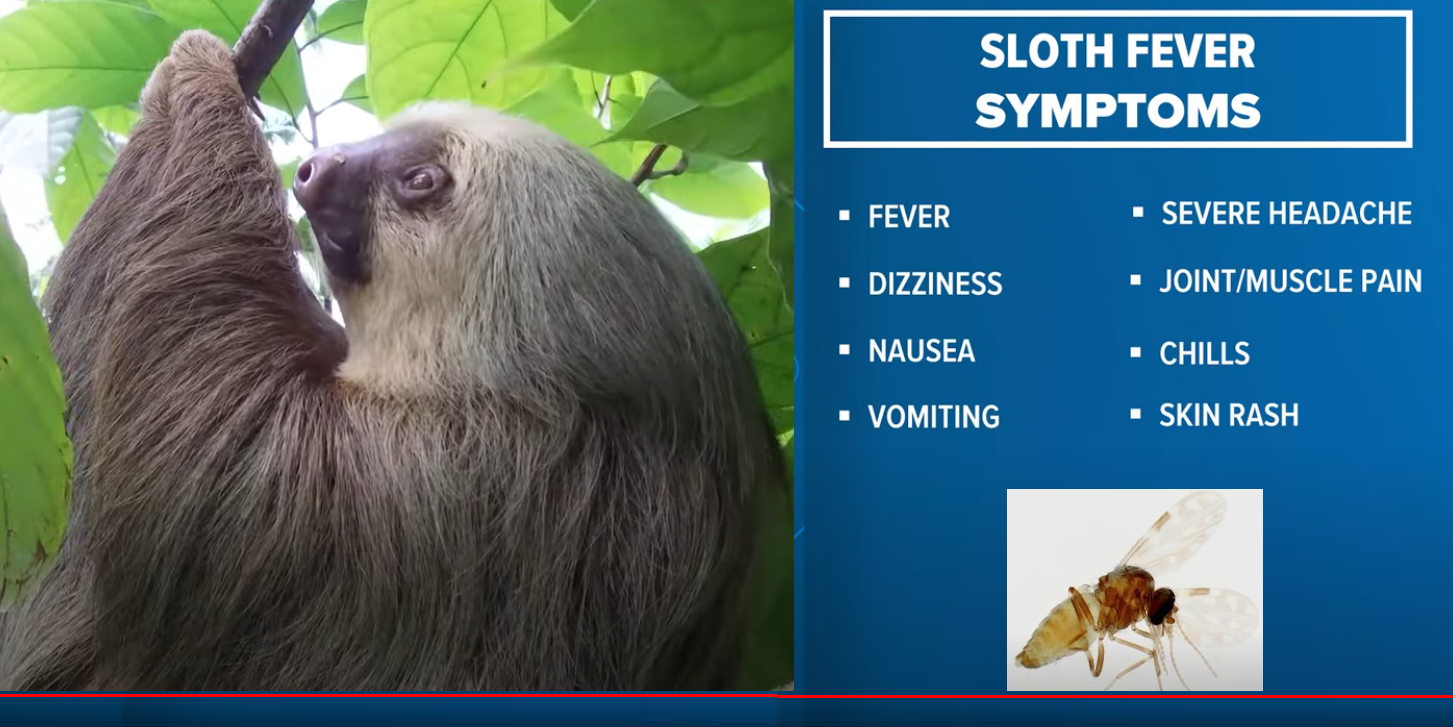
A rare tropical disease known as “sloth fever” is causing alarm among health officials as cases begin to appear in the United States. The Centers for Disease Control and Prevention (CDC) reports that Florida has documented 20 cases, while New York has confirmed one case, all linked to international travel.
The Oropouche virus, which causes sloth fever, has been detected in travelers returning from Cuba and other parts of South America. This development is particularly concerning as Americans return from summer vacations, potentially bringing the virus with them.
Sloth fever, scientifically known as Oropouche virus disease, is primarily transmitted by biting midges and certain mosquito species. The virus gets its colloquial name from its presence in sloths, though it can also infect other animals such as rodents, primates, and birds.
Symptoms and Severity
Approximately 60% of infected individuals become symptomatic, with common signs including:
- Fever
- Headache
- Muscle and joint pain
- Sensitivity to light
- Dizziness
- Nausea and vomiting
While most cases are mild, there have been reports of more severe outcomes. In Brazil, two young, otherwise healthy individuals have died from the infection. Additionally, there are concerns about potential transmission from pregnant women to fetuses, with reports of fetal deaths and birth defects.
The current outbreak extends beyond U.S. borders, with over 8,000 cases reported across South America and the Caribbean, including Brazil, Bolivia, Peru, Colombia, and Cuba. European health officials have also identified cases among travelers returning from these regions.
The CDC has issued a Level 2 travel health alert for Cuba, advising travelers to take enhanced precautions. A Level 1 alert is in place for affected South American countries. Health officials recommend that pregnant women avoid nonessential travel to these areas and that all travelers take measures to prevent insect bites.
Several factors complicate the management of this emerging threat:
- No specific treatment or vaccine is available for Oropouche virus.
- Diagnosis can be challenging due to similarities with other mosquito-borne illnesses.
- The potential for local transmission in the U.S. remains a concern, though no evidence of this has been found yet.
As health officials monitor the situation, they emphasize the need for increased awareness among healthcare providers and the public. The CDC advises clinicians to consider Oropouche virus infection in patients with compatible symptoms and recent travel history to affected areas.While the immediate risk to the general U.S. population remains low, the emergence of sloth fever underscores the interconnectedness of global health and the importance of vigilant disease surveillance and prevention efforts.

