

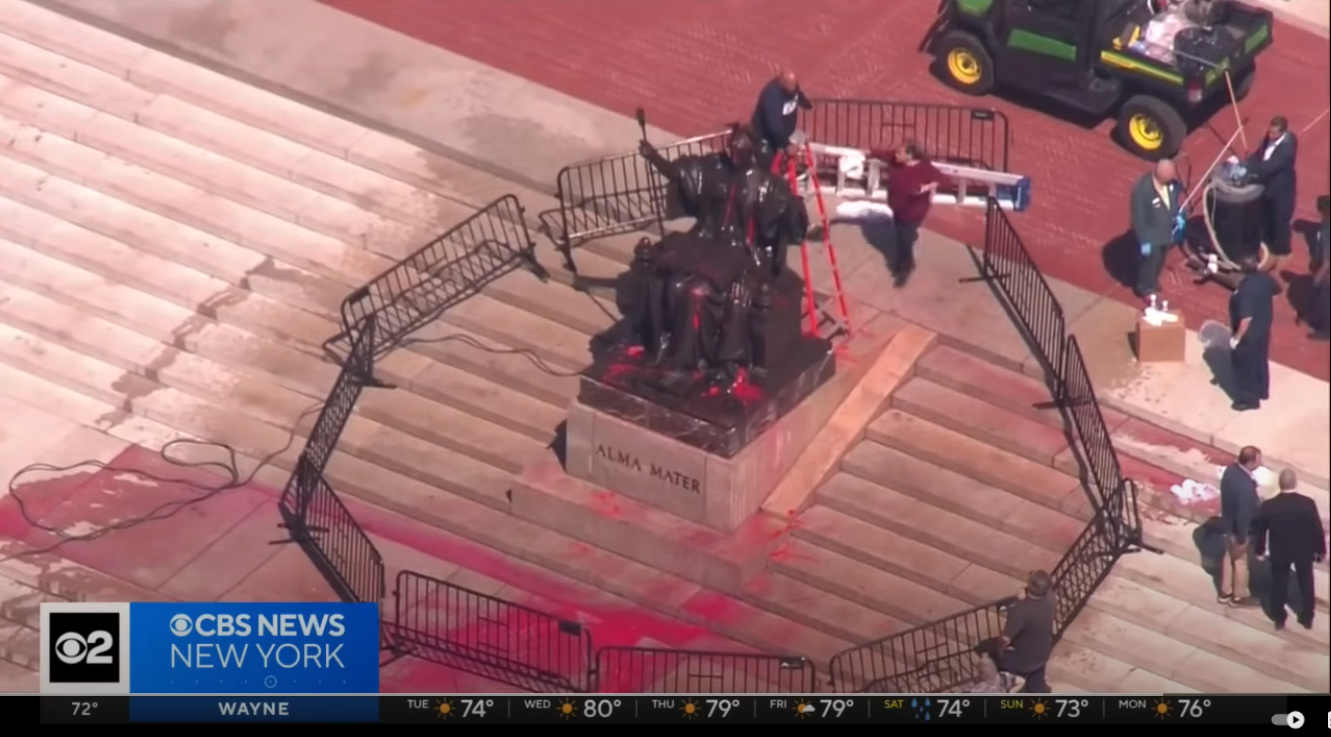
Columbia University is preparing for another semester of heightened tensions as Pro-Palestinian demonstrations erupt on the first day of classes. Protesters gathered outside the Morningside Heights campus, picketing and voicing their support for Gaza. The demonstrations, which have been a recurring presence on campus, show no signs of slowing down, sparking debate among students and faculty about the best way forward.
Protesters chalked pro-Gaza messages on the sidewalks outside Columbia’s gates and splashed red paint on the iconic Alma Mater statue, symbolizing what they say is the bloodshed in the ongoing Israeli-Palestinian conflict. In response, Columbia University has heightened security measures, setting up blue tents at campus entry points where students and staff must scan their IDs to enter, creating a more controlled and secure environment.
The protests are also impacting the classroom experience. One law school student reported that professors are already discussing the possibility of switching to virtual learning if the protests intensify. The threat of disruption looms large as the semester progresses, and some faculty are making contingency plans to ensure education continues without interruption.
Interim President Katrina Armstrong addressed the campus community in her welcome statement, though she avoided directly addressing the ongoing protest concerns. Armstrong emphasized that she is engaged in conversations with students and faculty and is “listening” to their perspectives, but some students feel the administration has not gone far enough in addressing the growing unrest.
While many students have expressed solidarity with the pro-Palestinian cause, others are concerned about the potential disruption to their education and the polarized atmosphere on campus. “I’m hopeful the protests will remain peaceful and productive,” said one undergraduate student, adding that the protests have brought important issues to light. However, another student noted, “It’s hard to focus on academics when the campus feels so divided.”
Columbia has been a focal point for activist movements in the past, and this latest wave of protests comes amid a broader national conversation about the Israeli-Palestinian conflict. As the semester unfolds, the university is expected to navigate a delicate balance between maintaining campus security, ensuring academic continuity, and addressing the concerns raised by the protesters.

