

Haitian-American leaders on Long Island are calling for an apology from former President Donald Trump after his controversial remarks during this week’s presidential debate, in which he falsely claimed that Haitian immigrants are eating pets. The comments have sparked outrage among the Haitian-American community, with many accusing Trump of perpetuating harmful stereotypes and spreading misinformation.
Nassau County Legislator Carrie Solages, along with other Haitian leaders, gathered at a Haitian church in Elmont on Thursday to condemn Trump’s remarks, labeling them as “racist, untrue, un-American, and anti-immigrant.” The leaders emphasized that such statements fuel xenophobia and do not reflect the values of a nation built on diversity and inclusivity.
“These comments are not just offensive to Haitians—they are offensive to all immigrants who come to this country seeking a better life,” said Solages. “Donald Trump’s rhetoric is a clear example of the kind of divisive language that seeks to dehumanize and scapegoat immigrant communities.”
During the presidential debate, Trump doubled down on unsubstantiated claims circulating on social media that immigrants in Springfield, Ohio, have been eating dogs and cats. Fact-checkers and local authorities in Springfield have since confirmed that there is no evidence to support these allegations. However, the damage has already been done, with many immigrants feeling targeted by the baseless accusations.
Haitian leaders on Long Island are also pressing local Republican officials to denounce Trump’s remarks ahead of his scheduled rally at Nassau Coliseum next week. They argue that remaining silent on the issue would be tantamount to endorsing his harmful rhetoric.
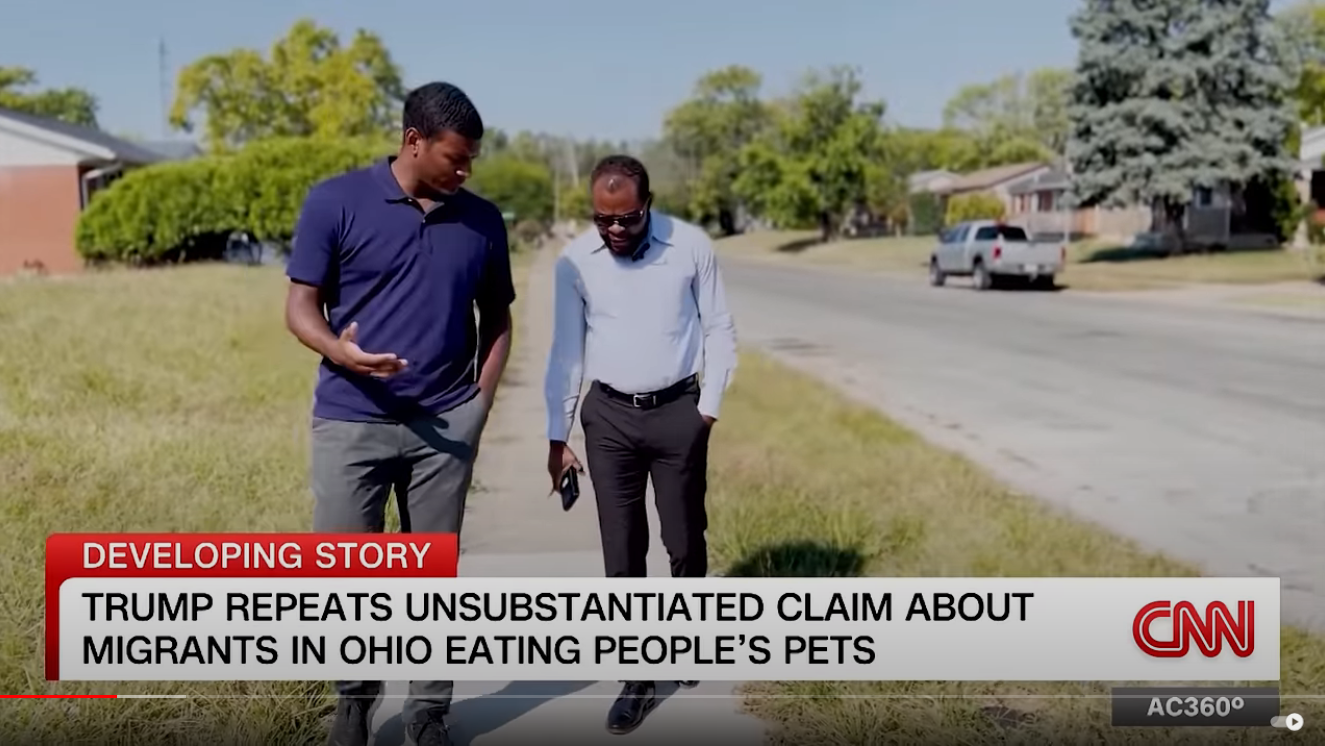
Trump’s comments have drawn widespread criticism beyond the Haitian community, with media outlets like CNN investigating the claims made during the debate. CNN’s Omar Jimenez recently visited Springfield, Ohio, and found no evidence to support Trump’s statements about migrants eating pets. Local residents expressed confusion and frustration over the false portrayal of their town, with some calling Trump’s remarks “completely fabricated.”
Community leaders in Elmont stressed that Trump’s comments are part of a broader pattern of disinformation aimed at stoking fear and resentment toward immigrant communities. “This is not just about words—it’s about the real-world consequences of misinformation,” said one Haitian pastor at the event. “These false claims can lead to increased hostility and violence against immigrants.”
The backlash from Haitian leaders highlights the growing tensions between immigrant communities and political figures who they feel are using divisive tactics to gain support. Advocacy groups are urging elected officials from both parties to stand up against such rhetoric and to promote unity and understanding among all Americans.
As the controversy continues to unfold, it remains to be seen whether Trump will address the demands for an apology or if local Republicans will respond to the calls for condemnation. Meanwhile, Haitian-Americans on Long Island are vowing to keep pressing for accountability and standing up against what they view as an attack on their community.

