

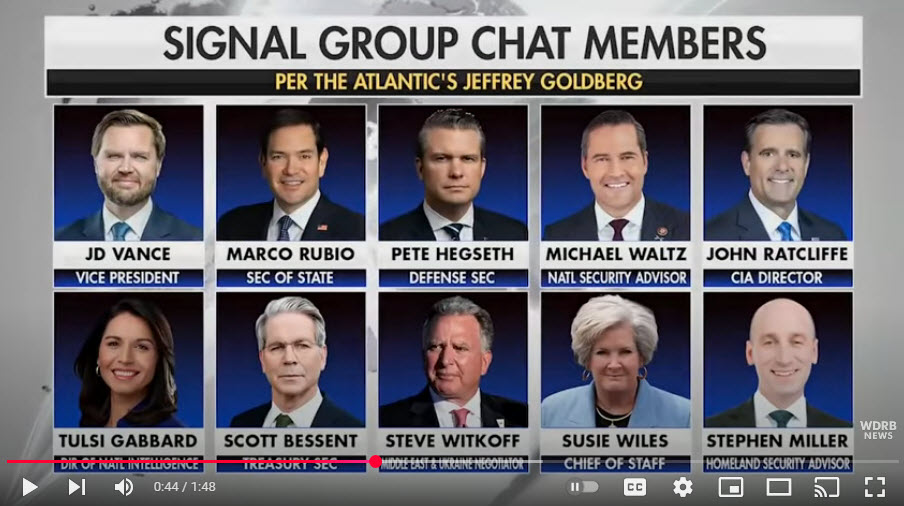
In a developing controversy dubbed “Signalgate,” the Trump administration faces mounting scrutiny over the use of the encrypted messaging app Signal for discussing sensitive national security matters. The situation has prompted calls for expanded investigations from both Congress and the Pentagon.
The issue comes to light when it is revealed that National Security Adviser Mike Waltz has established at least 20 Signal group chats to coordinate official work on topics including Ukraine, China, Gaza, Middle East policy, Africa, and Europe. These groups involve discussions among top officials such as Vice President J.D. Vance, Secretary of State Marco Rubio, and Director of National Intelligence Tulsi Gabbard. Concerns escalate after journalist Jeffrey Goldberg is inadvertently added to one such group, exposing details of planned military operations against Houthi militants in Yemen.
In response to these revelations, the Pentagon’s acting inspector general, Steven Stebbins, announces a formal review to assess whether Defense Department personnel, including Defense Secretary Pete Hegseth, comply with departmental policies and procedures regarding the use of commercial messaging applications for official business. The investigation will also examine adherence to classification and records retention requirements.
Congressional leaders express significant concern over the potential security risks posed by the use of unsecured communication platforms. Representative Joaquin Castro, a member of the House Intelligence Committee, labels the practice as “reckless,” emphasizing the dangers of discussing sensitive information on non-secure channels. Senator Mark Warner and Representative Bennie Thompson echo these sentiments, describing the actions as indicative of “sloppy, reckless incompetence.”
The White House downplays the severity of the incident, asserting that no classified information is shared via Signal and that the matter is addressed internally. President Trump publicly defends both Waltz and Hegseth, dismissing the breach as “the only glitch in two months” and expressing continued confidence in his national security team.
However, internal discord surfaces within the administration. Far-right commentator Laura Loomer, who has been informally advising President Trump, reportedly influences the dismissal of several National Security Council staffers following the breach. Loomer raises concerns about the loyalty of certain NSC members, including Deputy NSC official Alex Wong, citing alleged foreign connections and involvement in the Signal group chats.
The incident also strains international relations. Israel, which provides critical intelligence used in the U.S. strikes against the Houthis, expresses dissatisfaction over the leak of classified Signal messages. The exposed communications reveal U.S. officials identifying key Houthi targets, leading to concerns about the handling of shared intelligence.
As investigations proceed, there are growing calls for accountability and stricter communication protocols within the administration. The use of unsecured apps like Signal for discussing sensitive national security matters raises alarms about potential violations of federal record-keeping laws and the risk of foreign surveillance. The outcomes of these inquiries may have significant implications for the administration’s operational security practices and its approach to safeguarding classified information.
Sources:
- https://www.politico.com/news/2025/04/02/sloppy-reckless-waltz-use-of-signal-gmail-revives-concerns-about-white-house-communications-00268016
- https://apnews.com/article/f8581bcb447b91d2e7f9cb7809ae0f06
- https://www.thetimes.co.uk/article/laura-loomer-nsc-national-security-council-trump-q52fgpgtv
- https://nypost.com/2025/03/27/us-news/israel-complains-about-signalgate-leak-after-giving-us-key-intelligence-used-in-houthi-strike-report/
- https://www.theguardian.com/us-news/2025/mar/25/trump-comment-signal-chat-war-plans
- https://youtu.be/lZLvS5RSPEw

