

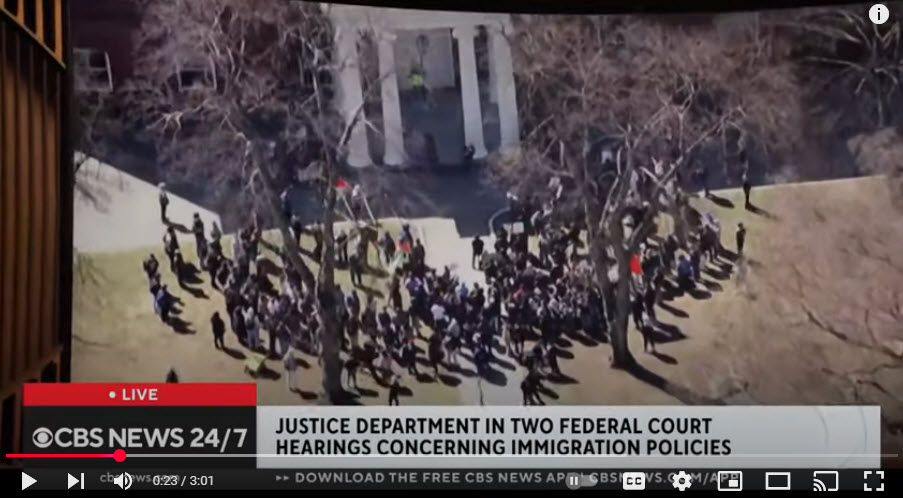
Recent legal proceedings intensify scrutiny of the Trump administration’s immigration policies, particularly regarding controversial deportation flights to El Salvador and the detention of Tufts University doctoral student Rümeysa Öztürk. These high-profile cases highlight the tension between the administration’s enforcement tactics and constitutional protections.
On March 15, 2025, President Donald Trump invokes the Alien Enemies Act of 1798 to authorize the deportation of individuals allegedly affiliated with the Venezuelan gang Tren de Aragua. Under this directive, 238 Venezuelans and 23 Salvadorans are deported to El Salvador’s Terrorism Confinement Center (CECOT). Critics argue that using the Alien Enemies Act—a wartime statute dating back over 200 years—for peacetime immigration enforcement circumvents legal safeguards and due process.
Judge James Boasberg issues a temporary restraining order to block additional deportations, but by then, several flights have already departed. The administration defends its actions by stating that the aircraft were beyond U.S. jurisdiction at the time the order was issued. This legal standoff leads to a series of appeals, with the case now under review by the U.S. Supreme Court.
Compounding the controversy is the wrongful deportation of Kilmar Armando Abrego García, a Salvadoran man with an active judicial order protecting him from removal. Despite this protection, Abrego is sent to CECOT and detained alongside alleged gang members. The Department of Homeland Security later admits the deportation was an “administrative error,” raising further concerns about flaws in immigration processing under the Trump administration’s enforcement regime.
Simultaneously, the detention of Rümeysa Öztürk, a Turkish doctoral candidate studying at Tufts University, becomes a flashpoint for debate over civil liberties. Öztürk is arrested by ICE in Somerville, Massachusetts, with little explanation. Civil rights groups and her legal team argue that her detention is retaliatory, possibly linked to a recent op-ed she co-authored criticizing the administration’s immigration policies. They claim her First Amendment rights and due process have been violated.
The government asserts that Öztürk was moved to a detention facility in Vermont before her legal team could file a complaint in Massachusetts, prompting the Department of Justice to challenge jurisdiction. Her legal team maintains that her arrest, transfer, and pending deportation are unlawful and seek her release. A federal court is now weighing whether her case should be heard in Massachusetts or in Louisiana, where an immigration hearing is also scheduled.
Legal scholars and human rights organizations point out that these incidents reflect broader concerns about the use of executive power in immigration enforcement. The Alien Enemies Act, rarely invoked since World War II, is now central to a modern immigration controversy. Critics argue that the administration’s reliance on it undermines existing legal standards and sets a dangerous precedent.
Public response has been polarized. Supporters of the administration argue that these actions are necessary for national security and immigration control. Opponents contend that the approach dehumanizes immigrants and bypasses democratic legal processes. As courts continue to weigh in, the outcomes of these cases may redefine the balance between executive authority and individual rights in the context of immigration.
SEO Description: Federal courts are reviewing Trump administration deportation flights and the detention of a Tufts University student, raising questions about executive authority, due process, and immigration enforcement.
Keywords: Trump administration, immigration policies, deportation flights, El Salvador, Alien Enemies Act, Rümeysa Öztürk, Tufts University, due process, immigration hearings, executive authority
Sources:
- https://www.reuters.com/legal/judge-weigh-if-trump-administration-violated-order-not-deport-venezuelans-2025-04-03/
- https://www.nypost.com/2025/04/03/us-news/trump-invites-president-of-el-salvador-to-white-house-your-support-of-my-efforts-to-combat-illegal-immigration-is-greatly-appreciated/
- https://www.theverge.com/policy/642060/trump-first-amendment-college-campus-free-speech-columbia-harvard
- https://www.theatlantic.com/ideas/archive/2025/04/trump-deportations-el-salvador/682267/
- https://www.vox.com/scotus/406719/trump-attack-immigrants-supreme-court
- https://nymag.com/intelligencer/article/men-deported-to-an-el-salvador-prison-could-be-innocent.html
- https://elpais.com/us/migracion/2025-04-01/estados-unidos-admite-haber-deportado-a-un-hombre-a-la-carcel-de-el-salvador-por-error-pese-a-que-tenia-proteccion-judicial.html
- https://www.huffingtonpost.es/global/trump-recurre-supremo-busca-permiso-expulsar-migrantes.html
- https://abcnews.go.com/US/judge-hear-arguments-trump-deportation-flights-defied-court/story?id=120446845
- https://www.nbcboston.com/news/local/federal-hearing-thursday-will-address-case-of-tufts-student-detained-by-ice/3675241/
- https://www.wbur.org/news/2025/04/03/tufts-student-ozturk-deportation-ice
- https://apnews.com/article/rumeysa-ozturk-deportation-tufts-massachusetts-student-1dd330bef8fb44b05f9818c0020728a0
- https://www.aclu.org/press-releases/in-new-filing-rumeysa-ozturk-urges-court-to-protect-her-rights-release-her
- https://www.foxnews.com/politics/trump-deportation-flights-court-order-boasberg
- https://www.ripbs.org/news-and-culture/government-reveals-timeline-of-rumeysa-ozturks-detention-in-effort-to-get-her-complaint-dismissed
- https://www.cbsnews.com/news/trump-administrative-error-deporting-man-el-salvador-prison/
- https://www.boston25news.com/news/local/federal-judge-hold-hearing-after-tufts-university-student-detained-by-ice-moved-out-mass/ZSIHDNGLZJGZXJLY57ISUEHX24/
- https://www.cbsnews.com/video/breaking-down-the-court-hearings-on-trump-administration-immigration-cases/
- https://www.wcax.com/2025/04/02/detained-tufts-student-taken-vermont-before-judges-order-government/

