

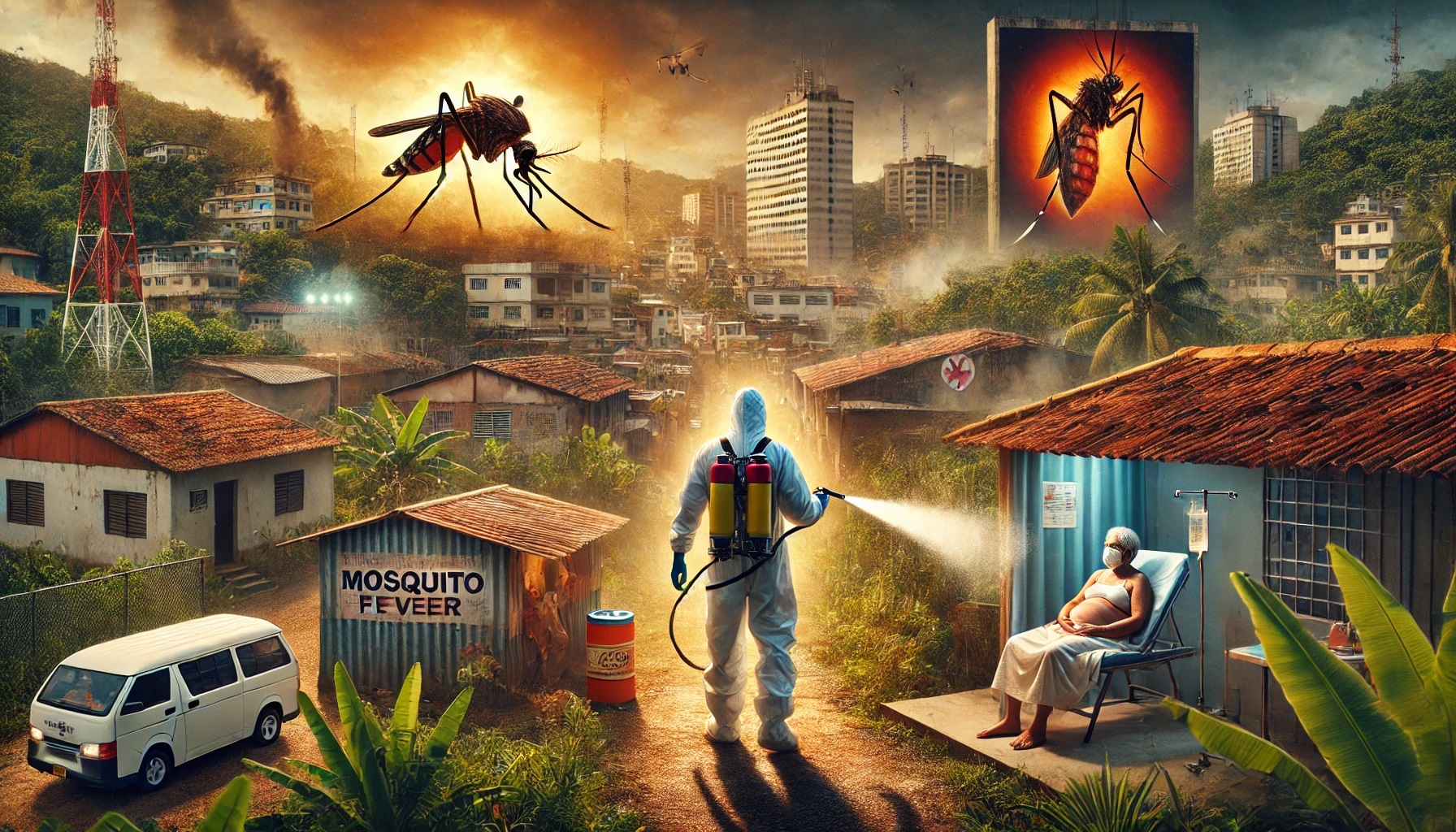
Dengue fever is spreading at an unprecedented rate across Central and South America, with health officials reporting more than 12 million cases this year, marking a record high. The Pan American Health Organization (PAHO) confirms that cases of the mosquito-borne illness have tripled compared to previous years, with over 7,700 deaths attributed to the virus.
Countries such as Colombia, Argentina, and Brazil are among the hardest hit, grappling with overwhelmed healthcare systems and widespread public concern. The increase in dengue cases has been linked to several factors, including climate change, urbanization, and insufficient mosquito control measures, which have created favorable conditions for the Aedes aegypti mosquito, the primary vector for the virus.
Dengue fever, often referred to as “breakbone fever” due to its severe symptoms, causes high fever, joint and muscle pain, rash, and, in severe cases, internal bleeding and organ failure. Public health experts are urging immediate measures to contain the outbreak, including intensified mosquito control efforts, public awareness campaigns, and expanded vaccination programs.
Vaccines for dengue fever are available in some affected countries, offering a critical tool for prevention. However, access remains uneven, and experts emphasize the need for global collaboration to ensure vaccines are widely distributed. PAHO is working closely with governments in the region to implement strategies aimed at reducing cases and preventing further deaths.
The surge in dengue cases has also drawn attention to the broader impact of mosquito-borne illnesses on public health. Officials warn that without sustained efforts to combat the spread of the virus, future outbreaks could pose even greater challenges.
As healthcare providers in Central and South America work tirelessly to manage the crisis, the global health community is calling for increased resources and research to address the factors driving the rapid rise in dengue fever cases. The record-breaking outbreak serves as a stark reminder of the urgent need to tackle infectious diseases exacerbated by environmental and societal changes.

