

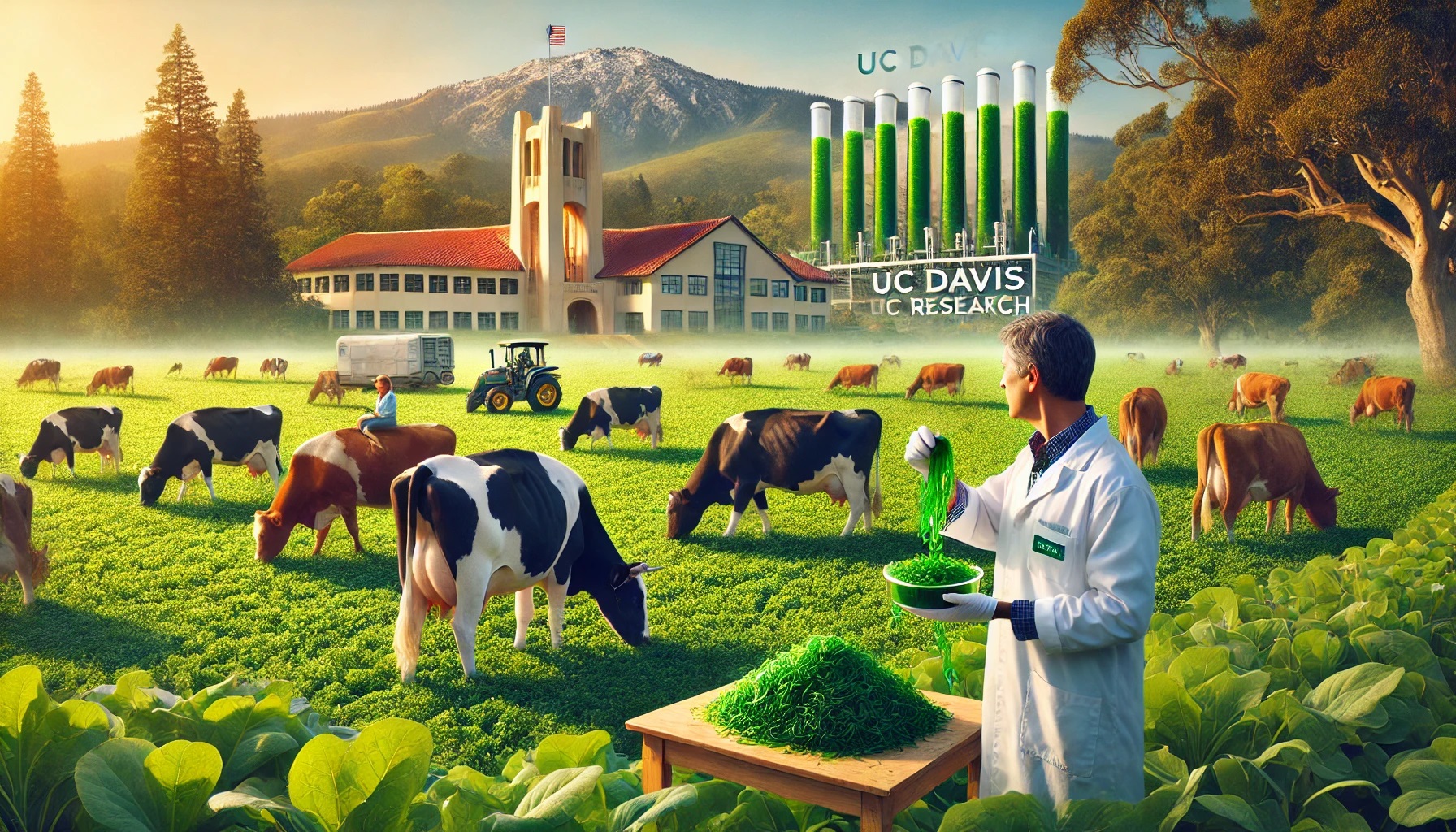
Researchers at the University of California, Davis, have developed an innovative approach to reduce methane emissions from cattle, a major contributor to climate change. The study, led by Professor Ermias Kebreab, reveals that adding a specific type of seaweed to cows’ diets can cut methane emissions from burps by nearly 40% without impacting the animals’ health or weight.
Methane, a potent greenhouse gas, is released in significant quantities during the digestive process of cattle. It is estimated that livestock emissions account for nearly 15% of global greenhouse gas emissions, with cow burps being a leading source. The breakthrough findings from UC Davis offer a promising solution for making cattle farming more sustainable while addressing a critical environmental challenge.
The research involves introducing a small amount of seaweed, specifically Asparagopsis taxiformis, into the cattle’s feed. This seaweed supplement inhibits the production of methane during digestion without affecting the cows’ appetite, growth, or milk production, which is crucial for ranchers.
Professor Kebreab emphasizes that scaling up the use of seaweed supplements could have a substantial impact on reducing global methane emissions. He notes that the supplement is easy to integrate into existing feeding practices, particularly for cattle grazing in pastures. If widely adopted, this innovation could revolutionize the agriculture industry’s approach to sustainability and its contribution to combating climate change.
Ranchers and environmentalists alike have praised the study for its dual benefits of reducing emissions and maintaining agricultural productivity. The next step, according to the researchers, involves working with policymakers and agricultural businesses to implement the solution on a larger scale.
The findings add to growing efforts worldwide to mitigate the environmental footprint of livestock farming. With the agriculture sector under increasing pressure to adopt sustainable practices, the seaweed supplement could play a critical role in achieving climate goals.

