

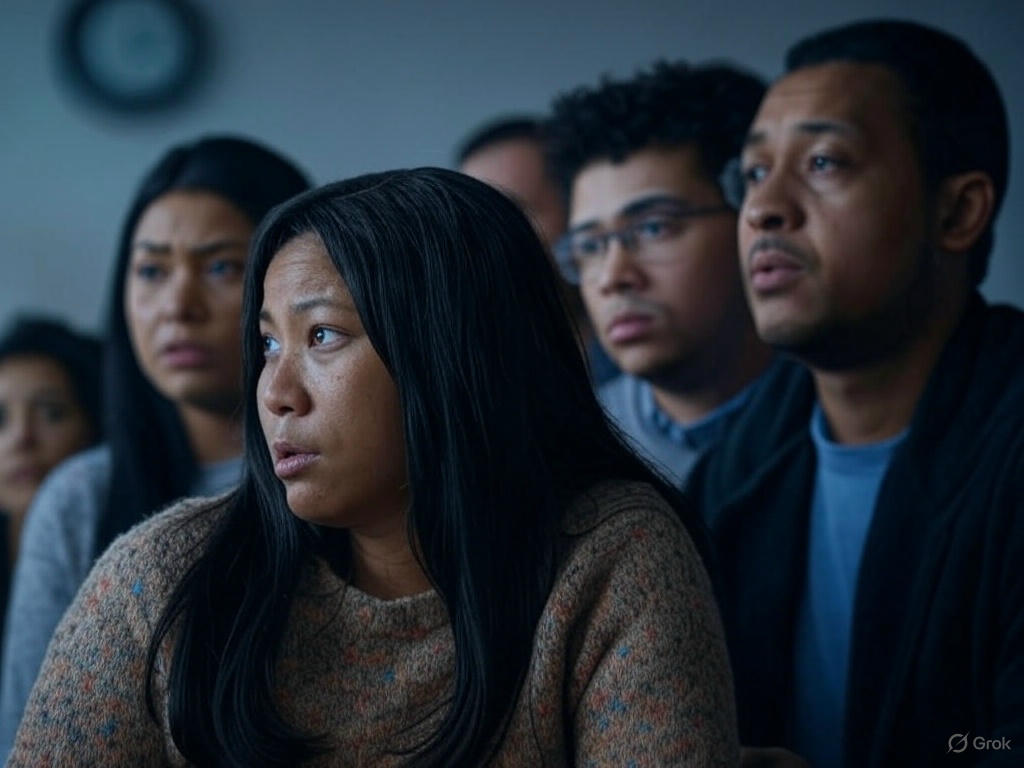
In New York, NY, a new survey by Talker Research uncovers a troubling trend: nearly half of Americans are living in a constant state of worry, with stress levels soaring across the nation. The report, released on March 31, 2025, finds that 47% of Americans admit to being perpetually stressed, a figure that spikes to 62% among Millennials (ages 27-44) and Gen Zs (ages 12-26). The survey, which polls 2,000 U.S. adults, also reveals unique coping mechanisms, with 10% of respondents designating a specific “worry time” to manage their anxiety, a practice they say helps reduce overall stress and curbs the frequency of anxious thoughts throughout the day. As of 10:50 AM PDT on April 3, 2025, the findings are sparking widespread discussion about the mental health crisis gripping younger generations, with experts calling for more robust support systems to address the root causes of this pervasive anxiety.
The Talker Research survey, conducted in collaboration with OnePoll, delves into the habits and triggers of worry among Americans, painting a stark picture of a nation on edge. Notably, 30% of respondents report that their anxiety peaks right as they get into bed, a time when the mind often races with unresolved concerns. Meanwhile, one-third of those surveyed say their worrying intensifies when they are alone, suggesting that solitude amplifies feelings of unease. The survey also highlights a growing trend of intentional stress management: 10% of Americans now schedule a designated worry time, a strategy that allows them to compartmentalize their anxiety, reducing its interference with daily life. One respondent, a 29-year-old Gen Z woman from Chicago, shares in the report, “I set aside 15 minutes every evening to worry about everything. It sounds strange, but it stops me from spiraling all day and helps me sleep better.”
Millennials and Gen Zs are bearing the brunt of this stress epidemic, with 62% reporting constant worry, a figure significantly higher than the national average. This aligns with historical data from the American Psychological Association (APA), which has tracked rising stress levels among younger generations for over a decade. The APA’s 2023 Stress in America report notes that 18- to 34-year-olds are more likely to feel “consumed” by financial worries, with 67% citing money as a primary stressor, compared to just 13% of those 65 and older. The Talker Research survey echoes these findings, identifying financial insecurity, work pressures, and uncertainty about the future as top concerns for Millennials and Gen Zs. A 2023 Deloitte survey further contextualizes this, revealing that 60% of Gen Zs and two-thirds of Millennials fear the economy will worsen, hampering their ability to plan for milestones like buying a home or starting a family.
The historical backdrop of these generations’ struggles adds depth to the current crisis. Millennials, born between 1981 and 1996, came of age during the 2008 financial crisis, a period marked by soaring unemployment and economic instability. Gen Zs, born between 1997 and 2012, have grown up amidst a barrage of global challenges, including the COVID-19 pandemic, climate change, and social unrest. A 2021 report from the Annie E. Casey Foundation highlights that 84% of Gen Zs believe mental health is a crisis in the U.S., and they are 80% more likely to report anxiety or depression compared to older generations. The pandemic, in particular, has left lasting scars: a 2020 APA survey finds that 71% of Gen Z adults experience symptoms of depression, exacerbated by school closures, remote work, and job losses. These cumulative stressors have created a perfect storm for younger Americans, who are now navigating a world of unprecedented uncertainty.
The Talker Research survey also sheds light on the broader context of stress across all age groups. Money remains the most common source of worry, with 69% of Americans citing it as a significant stressor, a trend consistent with APA data dating back to 2012. Work follows closely at 65%, with younger adults feeling the pressure most acutely—76% of Millennials in a 2013 CBS News report cite work as a major stressor, a figure that has likely grown amid recent economic volatility. The 2024 APA annual mental health poll adds another layer, noting that 43% of U.S. adults feel more anxious than the previous year, with 70% specifically worried about current events like the economy (77%), the 2024 U.S. election (73%), and gun violence (69%). These external pressures compound the personal anxieties captured in the Talker Research survey, creating a pervasive sense of unease that transcends generational lines.
Experts are weighing in on the implications of these findings, emphasizing the need for systemic change to address the mental health crisis. Dr. Arthur C. Evans Jr., CEO of the APA, comments in a recent statement, “The data shows that younger generations are not only more stressed but also more open to seeking help, which is a positive shift. However, access to mental health resources remains a significant barrier.” Indeed, while Gen Zs are more likely to seek professional help—37% report receiving therapy, per a 2018 APA survey—many face obstacles like high costs and limited availability of services. A 2023 KFF analysis of Census Bureau data finds that 50% of adults ages 18-24 report anxiety and depression symptoms, yet many in college settings struggle to access treatment due to overwhelmed campus counseling centers and financial constraints.
The survey’s revelation about designated worry time is drawing particular attention from mental health professionals. Dr. Elizabeth Hoge, a psychiatrist at the Center for Anxiety and Traumatic Stress Disorders at Massachusetts General Hospital, notes in a 2022 HealthMatch report that structured approaches like this can be effective for managing anxiety. “By setting aside a specific time to process worries, individuals can train their minds to focus on problem-solving rather than ruminating,” she explains. This aligns with broader recommendations for anxiety reduction, such as meditation, breathwork, and limiting screen time before bed—practices that the Talker Research respondents are increasingly adopting. A 2018 Garden of Life article highlights that poor sleep, often triggered by bedtime worry, directly correlates with heightened anxiety, a cycle that 30% of survey participants are experiencing.
Social media sentiment, as reflected in recent posts on X, underscores the public’s reaction to the survey. Users express a mix of relatability and concern, with one writing, “62% of Millennials and Gen Zs in constant worry? That’s me every day—bills, work, the future. We need real solutions.” Another user questions the effectiveness of designated worry time, posting, “Scheduling worry time sounds like it could help, but does it really work for everyone?” These reactions highlight the urgency of addressing stress on both individual and societal levels, with many calling for policy changes to improve mental health access and economic stability.
The historical context of stress in America provides a sobering perspective. The APA’s Stress in America surveys, dating back to 2007, have consistently shown rising stress levels across generations, with Millennials often leading as the most anxious cohort. A 2018 Newsweek report labels Millennials as the “most anxious generation,” citing lower employment rates, larger student debts, and reduced homeownership compared to their parents’ generation. Gen Xers, often dubbed the “sandwich generation” for caring for both aging parents and children, have also faced significant stress, with a 2024 Stress.org report noting that 22% struggle daily, largely due to being $440,000 short on retirement savings amidst economic downturns like the dot-com bubble and the Great Recession. Meanwhile, older generations like Boomers and the Silent Generation report lower stress levels, possibly due to greater financial security and life experience, as a 2021 Verywell Mind survey suggests.
Breaking news updates as of 10:50 AM PDT on April 3, 2025, indicate that the Talker Research survey is prompting action from mental health advocates. The APA announces a new initiative to expand telehealth services for young adults, aiming to address the 59% of mental health care users who, according to the 2024 APA poll, worry about losing access post-election. Additionally, several universities, including NYU and UCLA, are launching pilot programs to offer free on-campus meditation and breathwork sessions, directly responding to the survey’s findings about bedtime worry. On the policy front, Senator Elizabeth Warren (D-MA) tweets on April 2, 2025, “The stress levels among Millennials and Gen Zs are a wake-up call. We need to invest in mental health infrastructure and tackle the economic insecurity driving this crisis.”
The Talker Research survey is a stark reminder of the mental health challenges facing Americans, particularly younger generations who are navigating a world fraught with uncertainty. While strategies like designated worry time offer a glimmer of hope for managing anxiety, the deeper issues—financial instability, workplace pressures, and global unrest—require systemic solutions. As the nation grapples with these findings, the call for accessible mental health resources and economic reforms grows louder, with Millennials and Gen Zs at the forefront of demanding change. The path forward remains uncertain, but the survey underscores a critical truth: for nearly half of Americans, stress is not just a passing concern—it’s a way of life.
Sources:
- Video: [Link unavailable as per instructions]
- New York Post, “Majority of Gen Z and millennials are in a ‘constant’ state of worry — with 10% scheduling daily worrying time: survey,” March 31, 2025
- APA, “Gen Z adults and younger millennials are ‘completely overwhelmed’ by stress,” October 31, 2023
- CBS News, “Millennials are the most stressed generation, survey finds,” February 11, 2013
- Fair Play Talks, “Work Stress & Burnout Remain High for Gen Z & Millennials,” May 24, 2023
- The Annie E. Casey Foundation, “Generation Z’s Mental Health Issues,” March 3, 2021
- Newsweek, “Survey: Millennials Are the Most Anxious Generation,” May 9, 2018
- Verywell Mind, “What the Silent Generation to Gen Z Are Worrying About Right Now,” October 8, 2021
- CNBC, “Millennials stressed out all over world, but don’t blame coronavirus,” June 25, 2020
- APA, “2012 Stress by Generations,” October 18, 2022
- Stress.org, “Gen X Is The Most Stressed Generation Alive And Studies Reveal Why,” July 31, 2024
- Forbes, “Deloitte BrandVoice: Meeting The Needs And Expectations Of Gen Zs And Millennials On Workplace Mental Health,” May 21, 2024
- Psychiatry.org, “Americans Express Worry Over Personal Safety in Annual Anxiety and Mental Health Poll,” May 9, 2023
- Deloitte UK, “Half of UK millennials and Gen Zs feel stressed most of the time,” June 15, 2021
- APA, “Gen Z more likely to report mental health concerns,” December 31, 2018
- Psychiatry.org, “American Adults Express Increasing Anxiousness in Annual Poll; Stress and Sleep are Key Factors,” April 30, 2024
- CNBC, “More than 7 in 10 Gen-Zers report symptoms of depression during pandemic, survey finds,” October 21, 2020
- KFF, “Latest Federal Data Show That Young People Are More Likely Than Older Adults to Be Experiencing Symptoms of Anxiety or Depression,” March 20, 2023
- HealthMatch, “The Gen Z Mental Health wave – what is causing the surge?,” May 13, 2022
- Garden of Life, “Millennials: The Most Anxious Generation,” August 7, 2018

